FN
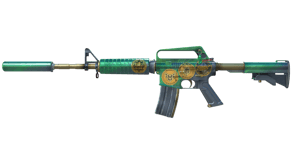
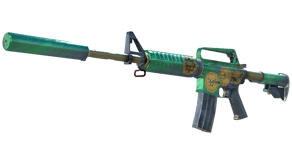
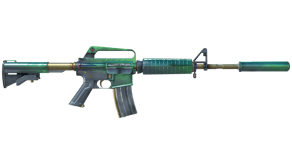
SV M4A1-SElectrum


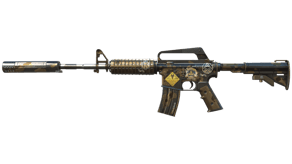
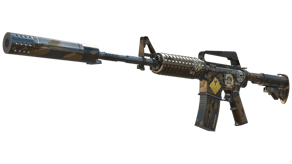
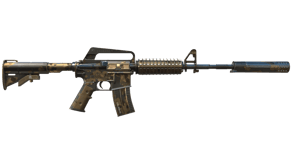
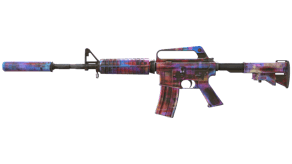
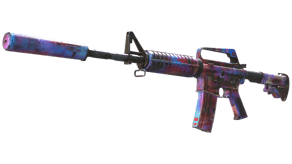
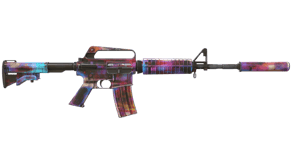
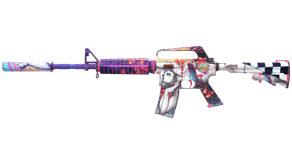
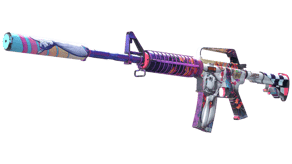
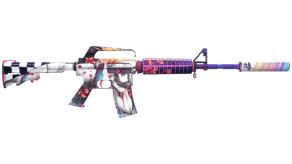
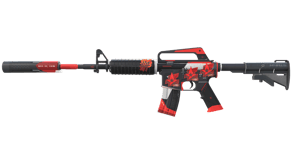
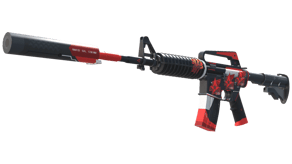
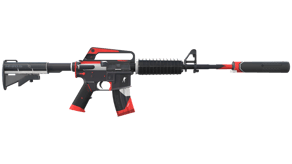

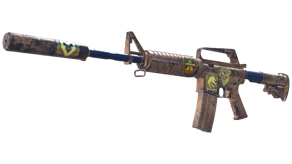
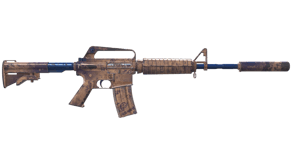
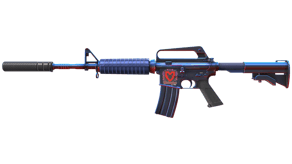
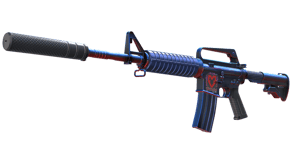
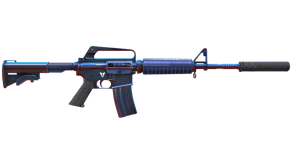
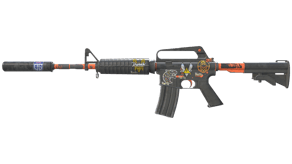
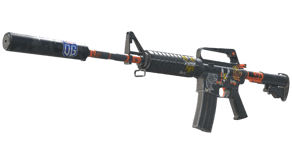
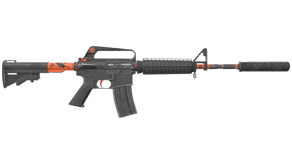
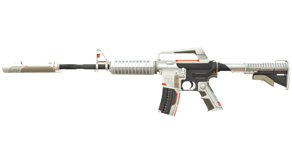
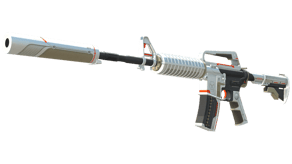
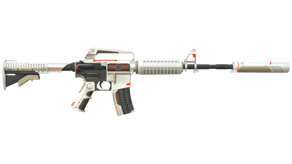
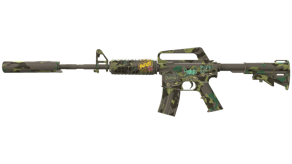
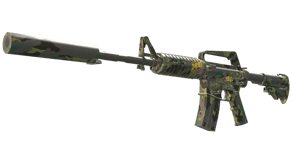
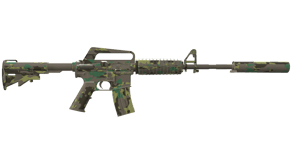
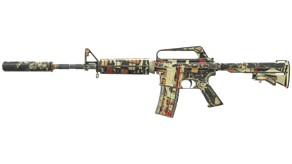
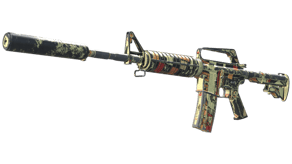
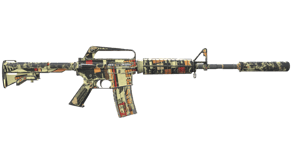
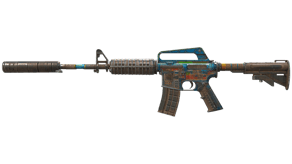
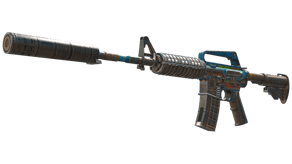
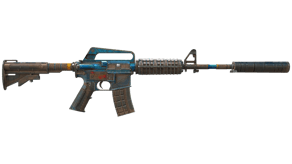
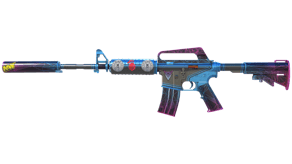
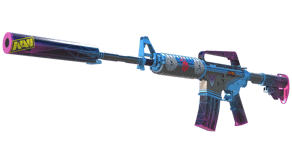
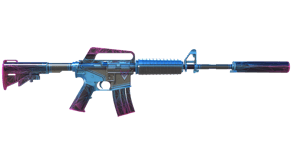
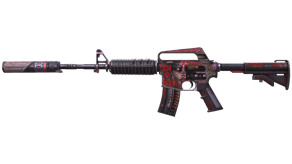
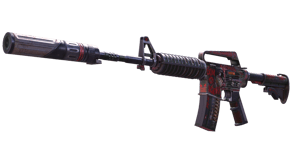
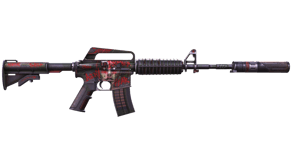
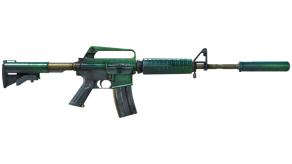

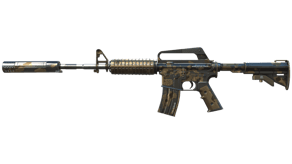
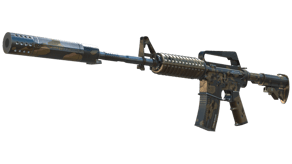
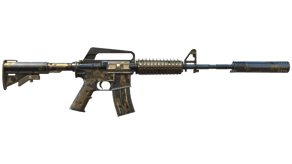
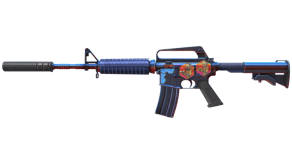
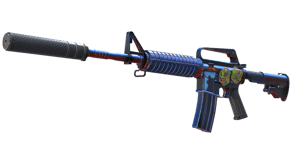
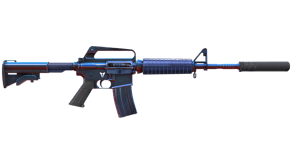
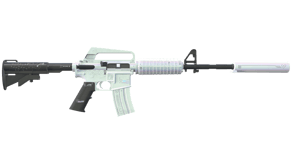
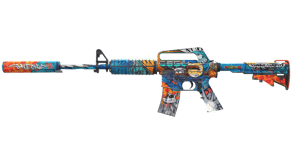
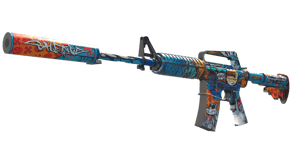
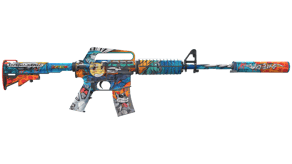

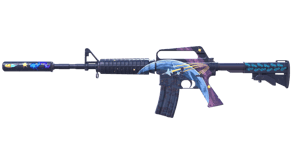
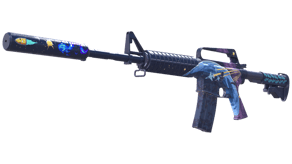
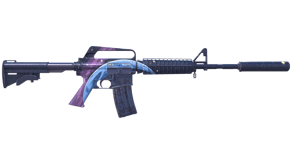
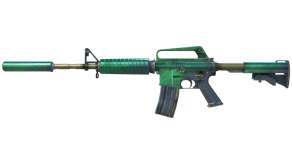
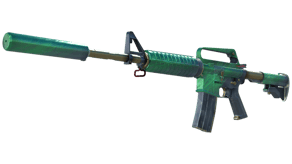
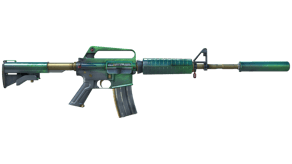
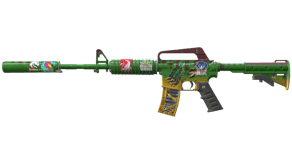
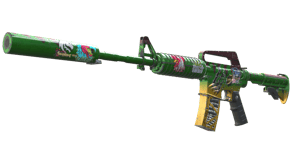
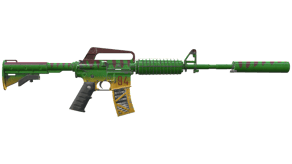
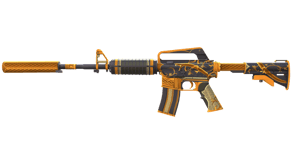
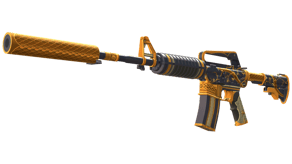
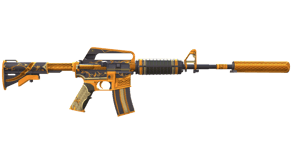
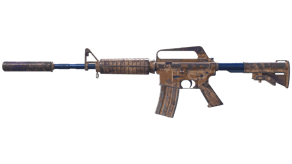
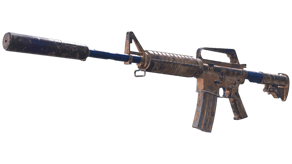
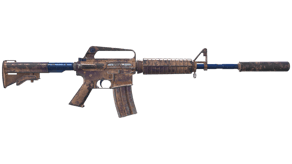
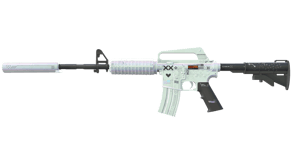
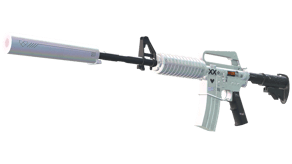
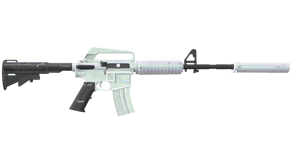
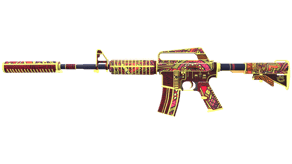
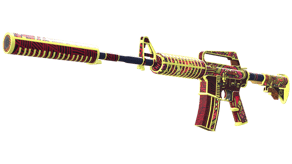
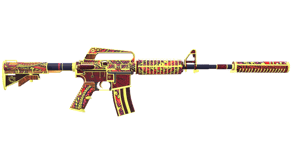
This is the M4A1-S | Decimator in Field-Tested (FT), and what separates it from the clean grade is price, not artwork. The drawing is identical; Factory New is asked about three times as much. The wear band runs from 0.15 to 0.38. The rank is Classified, and the rifle arrives from the Spectrum Case.
The top of the receiver, the handguard and the carry handle are dark blue, nearly black. The grip, the magazine, the stock and the front half of the suppressor are flooded with crimson. The boundary between the two is soft: blue spills into crimson with no line between them. Turquoise traces the front sight, the arc of the carry handle, the handguard ribs and the trigger guard. There is no graphic and no lettering on the body, so the effect rests on that gradient and those outlines.
In Field-Tested the wear settles on the crimson edges: the butt plate, the base of the magazine and the front face of the suppressor pale first. Next the turquoise outlines on the handguard ribs break up, while the large flats are barely touched. The palette survives this grade intact, since the brightness comes from the paint rather than from shine.
The finish was drawn by the Steam Workshop author Coridium, who put the submission up on March 10, 2016 as "M4A1-S - DECIMATOR 2000". He laid out the idea himself: the eighties entire, from Terminator, RoboCop, Blade Runner and Tron through to arcade cabinets and the music of Vangelis and Jean-Michel Jarre.
The loud palette was deliberate: his previous piece had been a muted one, and he wanted color after it. The number in the title he added to match the fashion of the day for names like T1000. The Spectrum Collection opened in the game on March 15, 2017, and the skin sits at number 644 in Valve's catalog.
What decides between listings:
The artwork is fixed, so no copy is rare on pattern. On the M4A1-S | Decimator the float counts for more than the name tag: a band of 0.15 to 0.38 holds a lot of different looks.
Factory New is roughly three times dearer, Minimal Wear about half again. No other wear drops below this one: Well-Worn is asked about a seventh more, Battle-Scarred a few percent more. The price floor of this finish falls on Field-Tested.
The model carries twelve Classified finishes, and the Decimator stands in the middle of them: six cheaper, five dearer. Nightmare and Party Animal sit just below, and Fatal Glitch is nearly double. The dearest Classified M4A1-S runs about nine times this one.
The skin drops from the Spectrum Case, and no other case holds the finish. To make a contract return the M4A1-S | Decimator, ten skins one rank below go in.
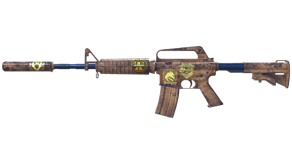
The M4A1-S | Decimator has a StatTrak version. Souvenir copies of the finish turn up as well, though no Souvenir packages were ever made for it: packages only ever covered tournament map collections. Those copies are built with the Souvenir-O-Matic, which puts gold tournament stickers and a player autograph on a normal skin from the inventory.
The background is demanding: dark blue with crimson accepts cool colors and fights warm ones. Holograms and neon stickers pick up the grid, while orange and yellow fall out of it. The free flat for a craft in CS2 is the receiver side; covering the stock and the magazine would be a waste, since the grid lies on them.
Field-Tested is the sensible grade when:
Closer to 0.38 the wear reaches the corners of the stock and the edge of the magazine, where the pink piping gives out first. At the start of the band only the receiver edges are touched.