


In the world of Rust, customization has long been part of the ritual: you can rebuild your base, but it’s the look of your weapons that sets the mood and shapes how the game feels. From the very first minutes, players start wondering how to build the best Rust skin set so it looks cohesive and harmonious. In practice, it all comes down to one thing: the best set is one that sticks to a single palette, reads cleanly on every item, and supports your chosen style. It doesn’t have to be the most expensive—harmony and recognizability matter far more.
Players see skins not just as a “wrapper,” but as a way to make a statement: the aesthetics are pleasing to the eye, collecting brings the thrill of the hunt, and individuality helps you stand out on the server. When you head into a raid with a familiar-pattern AK, even an ordinary moment takes on a hint of your “signature” style.
Why are skins important in Rust?
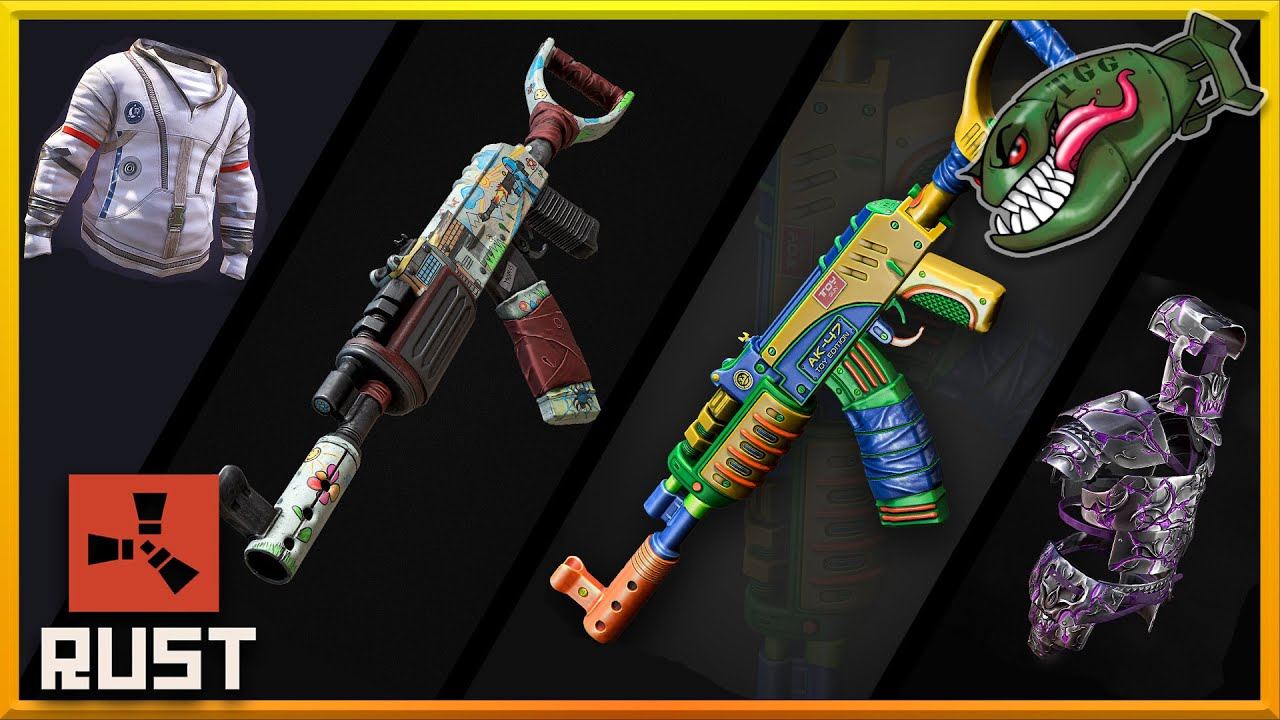
Veterans notice this all the time: when you’re holding a familiar weapon with the “right” pattern, your inner confidence rises. Aesthetics aren’t damage numbers, but they deepen immersion: a glance at the sight, a shine on the metal, a palette that matches your armor—your brain reads it all as a single image. That’s how the best Rust skins set the tone of a fight without breaking balance.
How does rarity work, and why does it matter?
Players think in tiers—“common — rare — epic”—and the hierarchy is intuitive: the more seldom an item appears and the more distinctive its visual code, the more “collectible” it feels. This logic shapes perception directly: so-called “commons” are great for everyday sets, “rares” build personal style, and “epics” showcase status. That’s why part of the community gravitates toward showpiece loadouts—what many call the very best Rust skins—while others deliberately assemble “smart,” budget combinations, picking the best budget Rust skins to match their palette and playstyle.
What’s the value from a player’s point of view?
It’s about control and recognizability. When your set is dialed in, you leave a “signature” on the server: allies recognize you on sight, enemies remember you. Well-matched elements also make life easier—it’s simpler to keep your inventory tidy, switch weapons “by feel,” and stay in rhythm. Bottom line: the best Rust skins are about emotion and identity, not stat advantages; they make every session feel a bit more like “yours.”
The best skins for specific weapons
The AK-47 is a Rust icon, so it gets the community’s keenest “eye.” Below are five standout options, each with its own vibe and role in a set. Together they cover the spectrum—from status to accessibility. This is how a player chooses not just a pretty texture, but the foundation of a future set in which the best Rust skins are readable at a glance.
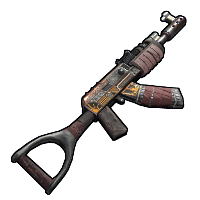
Glory AK47
Impression: a “showpiece” and a status symbol. Metal, contrast, and crisp detailing make the silhouette recognizable from afar.
Rarity/perception: high.
Role in sets: the core of legendary combinations where every piece marks a collector.
Price guide: $250.
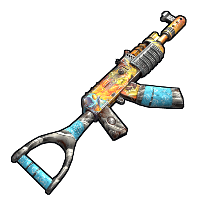
Mystic AK47
Impression: striking “mysticism” with soft color shifts and a fantasy accent.
Rarity/perception: mid-high.
Role in sets: an epic centerpiece for bright armor and decorative elements.
Price guide: $18.
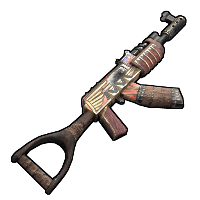
Anubis AK47
Impression: a themed style with golden elements and Egyptian motifs.
Rarity/perception: high.
Role in sets: a contrasting focal point for dark and sandy palettes.
Price guide: $9.
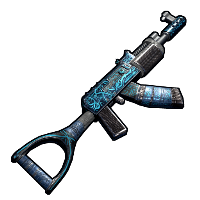
Azul AK47
Impression: a restrained blue scheme with a hint of camouflage.
Rarity/perception: medium.
Role in sets: a base for budget and everyday loadouts when you want a calm palette.
Price guide: $6.50.
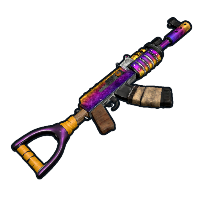
Tempered AK47
Impression: the “tempered” metallic sheen every Rust veteran recognizes.
Rarity/perception: mid-high.
Role in sets: a universal anchor—pairs with most armor skins.
Price guide: $9.
Once you have this foundation, it’s easier to define the extremes: where you want “wow-factor” status and where you want steady, everyday aesthetics. That’s how the best Rust skins assemble themselves into a raid-ready look.
Quick reference table for the AK-47 (for easy comparison)
Skin | Palette/style | Rarity (perception) | Role in set | Price guide |
Glory | Contrasting metal, accents | High | Core of a legendary set | $250 |
Mystic | Shimmer, “fantasy” vibe | Mid-high | Centerpiece of an epic set | $18 |
Anubis | Dark-gold theme | High | Focal point in dark palettes | $9 |
Azul | Calm blue scheme | Medium | Base for a budget set | $6.50 |
Tempered | Iridescent “steel” | Mid-high | Universal anchor | $9 |
Which other weapon skins are worth tracking?
Even die-hard AK fans have favorite “supporting roles.” For a complete set, players often pick SMGs, rifles, pistols, and apparel in similar palettes. This keeps a consistent visual throughline so the very best Rust skins “play” together instead of clashing.
To avoid overspending (and overstyling), it’s smart to keep 2–3 pieces for different contexts: one loud piece for showing off, one understated for raids, and one “themed” option for atmospheric sessions. That way, the best budget Rust skins become part of your daily kit, while pricier items stay “for special occasions.”
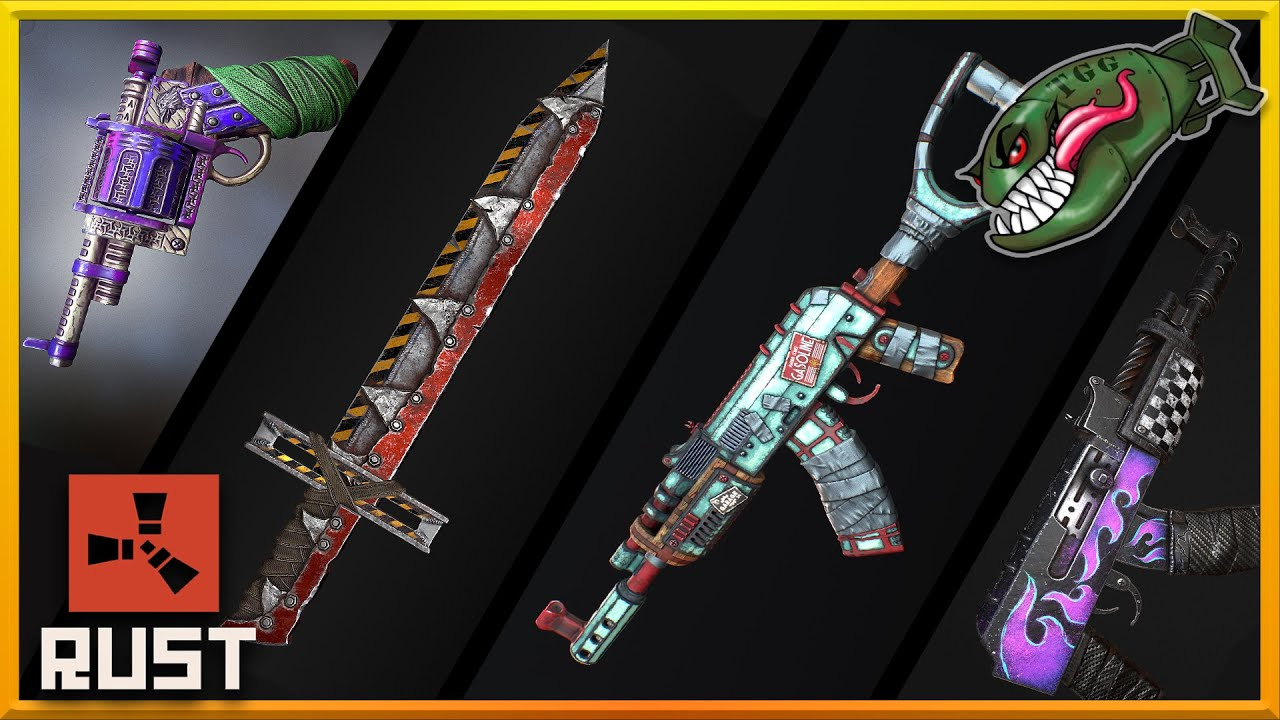
How to build the best Rust skin set?
A set isn’t just a “bundle of pretties.” It’s a visible system: weapons, armor, doors, decor, tools, and even your starter rock can all “speak” the same language. With this mindset, the best Rust skins work like a modular kit: items are interchangeable but stay on-style.
Which go-to strategies work best?
First, a principle: players who alternate between “showpiece” and “raid” modes don’t regret purchases. Loud for social effect, restrained for practice. That way both the very best Rust skins and your everyday pieces have clear roles.
Legendary set (status & showcase)
Foundation: Glory AK47. Palette: contrasting metal + deep dark tones.
Pros: maximum recognizability, a player’s “signature,” showpiece impact.
Risks: high cost; requires careful matching for supporting items.
For whom: collectors and clan leaders who want to be remembered.Epic set (balance of impact and cost)
Foundation: Mystic AK47 or Anubis AK47. Palette: bright shimmer/gold + neutral armor.
Pros: striking look without extreme spending; flexible supporting pieces.
Risks: easy to “overheat” the look with too many flashy add-ons.
For whom: seasoned players who value individuality and budget control.Budget set (everyday aesthetics)
Foundation: Azul AK47 or Tempered AK47. Palette: blue/steel tones + calm apparel and decor.
Pros: low entry cost, lots of mix-and-match, fewer mistakes.
Risks: can feel “flat” without a single accent item.
For whom: newcomers and pragmatists who want the best budget Rust skins without overspending.
After choosing a strategy, build a “capsule”: 1–2 doors for the base, one jacket/armor piece, a tool, and a sidearm in the same palette. This is how the best Rust skins shape a recognizable “you” on the server.
Budget options and smart buys
Where to find the best cheap Rust skins and avoid overpaying?
Saving doesn’t mean sacrificing style. Many players start with a couple of simple pieces, then flesh out the set: if your base is blue (Azul), it’s easy to add calm doors and jackets; if it’s “steel” (Tempered), silver and black accessories do the work. In this way, the best Rust skins are complemented by sensible everyday choices.
Two practical rules before the list: compare like-for-like items within a style, and keep a “wish basket.” It not only adds discipline but also curbs impulse buys—your visual line holds together better.
Pick your palette first (2–3 colors), then search for items within it.
Cross-check similar options (doors/armor/tools)—the “second choice” often delivers nearly the same effect.
Build the set step by step: primary gun → armor → doors → tool.
Audit your “capsule” periodically to avoid duplicating pieces.
With this “micro-strategy,” even a basic inventory looks cohesive, and each new purchase is intentional. The result: you’re holding the best cheap Rust skins that don’t clash with the top-tier pieces, they support your style.
How to store and curate skins effectively?
Let “set logic” help: group items by look, not by type. One “slot” for everything in the Azul palette, another for Tempered, a third for an epic “festive” bundle. That way the best Rust skins are easier to find and less likely to be duplicated.
Practical tips: give folders clear names (“Azul/raid,” “Tempered/everyday”), keep rare items separate from daily drivers, and run periodic “inventory checks”—it saves your budget and frees space for truly new ideas.
How to sell, trade, and buy safely?
Universal rules are simple: verify URLs, never share account credentials, use only official trading mechanics, and don’t trust “too good to be true” deals. This is especially crucial for “showpiece” and truly rare items—everything you personally consider among the very best Rust skins. Daily items carry less risk, but the discipline is the same, because the best budget Rust skins form the backbone of your style too, and it’s a shame to lose them to carelessness.
Trends and skin popularity
Trends in Rust come and go, but veterans see consistent patterns. Demand for “classics” (Tempered) holds steady, interest in themed and shimmering looks (Mystic, Anubis) is rising, and an influx of newcomers boosts the value of tidy budget choices (Azul and similarly calm pieces). In this environment, the best Rust skins aren’t “one right answer,” but a flexible wardrobe tuned to your mood and tasks.
How to read the “stats” with a clear head?
Don’t chase popularity spikes alone—lean on your own “capsule.” If your set is already cohesive, you don’t need to jump on every trend. A “trend” is good when it supports your palette and adds depth. In other words, the very best Rust skins are those that strengthen the image you’ve chosen, not those that break it for a moment of hype.
Advice by player type
What should a newcomer do to start without mistakes?
Begin with a 3–4 piece “capsule”: one anchor rifle (Azul/Tempered), a neutral jacket, a door for the base, and a tool “in tune.” This way the best budget Rust skins quickly give you a sense of personal style, and future purchases become targeted.
What fits an experienced player seeking impact and control?
Go for the “epic balance”: a base set with one accent (Mystic or Anubis) plus strict, understated supporting items. Here, the best Rust skins are a managed contrast: one bold focus + calm support, without visual “noise.”
How does a collector think, when history and a “showcase” matter?
They build a showcase around an “anchor legend” (Glory), pairing rare with rare, and keep everyday pieces in a separate “capsule.” Such a player often asks about the best Rust skin set, and the answer is: structure over price; image first, then expand the line.
Checklist before buying: how to avoid buyer’s remorse
It’s easy to impulse-buy: you see a flashy AK, you like it, you buy it—and then it clashes with your armor or base door. The item ends up gathering dust in your inventory. To avoid that, run every skin through a quick checklist. It takes a minute and genuinely saves money.
Does the palette fit? If your set is in blue tones (say, with an Azul AK47), a bright red jacket will look out of place. Stick to 2–3 core colors.
Is there a focus? A skin should either be the main accent (like the Glory AK47) or support that accent. With two or three focal points, the look starts to “buzz.”
Can it be swapped? Imagine your taste changes in a month. Can you replace this piece with another in the same palette without wrecking the set? If yes—go for it.
Does it strengthen the set? Every new skin should complement your existing “capsule.” If it breaks the style and forces you to change half your items, that’s a sign to skip it.
Do you know where you’ll use it? Some skins are great for raids (dark, low-key), others for “showing off” on the server. If you know exactly where it fits—buy. If not, hold off.
After this quick check, the choice becomes obvious: either the item truly fits and strengthens your collection, or it’s better to wait. That’s how even the very best Rust skins stop being impulse buys and become intentional parts of your sets.
Conclusion
Skins in Rust are a language of self-expression. They don’t change stats, but they change how a fight feels, help you keep rhythm, and leave a “signature” on the server. You don’t need a bottomless wallet: a thoughtful palette, a single accent, and disciplined buying are enough. Then the best Rust skins start working as a system: legendary pieces become the showcase, while a tidy “everyday” core keeps your image in shape.
