


The ranking system in Counter-Strike 2 has changed significantly compared to its predecessor. A lot of players wonder exactly how many ranks CS2 has at this point. The answer is that CS2 runs two parallel systems: Premier mode with seven color-coded rating tiers, and the classic Wingman mode with the familiar eighteen-rank ladder. Each system has its own progression mechanics and appeals to different types of players.
When CS2 launched in September 2023, Valve completely rethought their approach to competitive play. Players can now choose between a transparent numerical rating system and the traditional rank icons that CS:GO players spent years climbing.
What Ranking Systems Does CS2 Have?
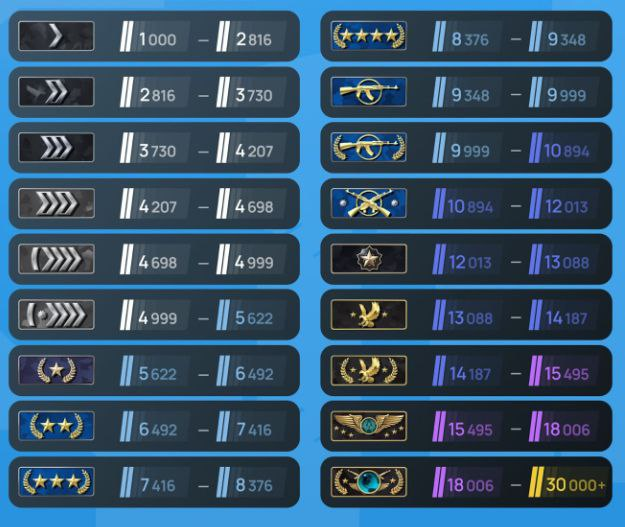
Counter-Strike 2 features two independent ranked modes, each with its own approach to measuring player skill. The first is Premier mode — Valve's new take on competitive play, built around a transparent numerical rating. The second is the classic Wingman mode, which carries over the traditional rank system from the previous game.
Premier uses the CS Rating system — a numerical score ranging from 0 to 35,000+, organized into seven color tiers. This has become the go-to mode for serious players and esports hopefuls, since it lets you track your progress precisely after every match. You can see exactly how your rating shifts based on the result and your individual performance.
Wingman preserves the classic eighteen-icon system familiar to veterans of the series. Progress here is less transparent — your rank can stay the same across multiple games in a row, which makes rank-ups and deranks feel more like surprises when they happen.
How Many Ranks Does Premier Mode Have?
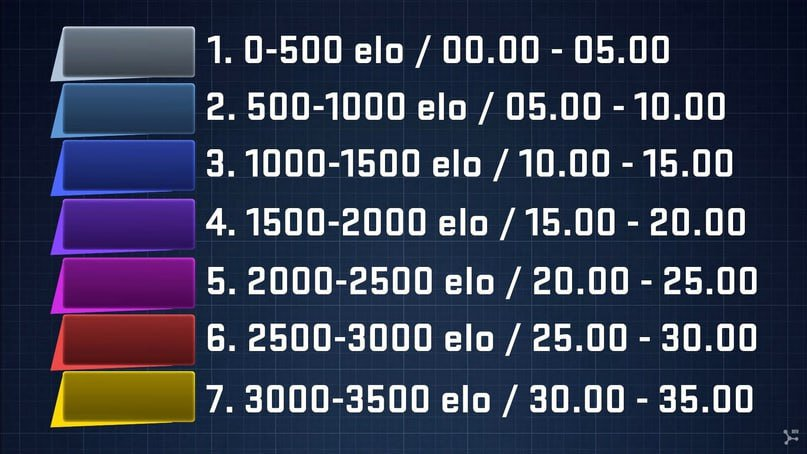
The Premier system is built around seven color tiers, each covering its own rating range. Unlike the traditional CS2 ranks in Wingman, there are no abrupt jumps — you can see your exact number and climb smoothly within your color zone.
It starts with Grey, covering 0 to 4,999 — where new players and those who had a rough placement experience tend to land. Light Blue runs from 5,000 to 9,999 and represents players who've got the basics of shooting and economy down. Blue, spanning 10,000–14,999, marks the mid-skill bracket, where people generally understand tactics and positioning.
From there comes Purple, 15,000 to 19,999 — skilled players with refined mechanics and solid team coordination. Pink sits at 20,000–24,999, a high-level bracket where you'll encounter serious dedicated players and up-and-coming competitors. Red, from 25,000 to 29,999, is the elite end — players who regularly compete in tournaments and play on FACEIT.
Finally, Yellow — the holy grail, 30,000 and above. This is where professional-level players operate, and only around 0.5% of the entire CS2 playerbase ever makes it here. Every rating point at this level is genuinely hard-fought.
Premier Rating Distribution Table:
Color | Rating Range | Player Level |
Grey | 0 – 4,999 | New players |
Light Blue | 5,000 – 9,999 | Developing |
Blue | 10,000 – 14,999 | Mid-level |
Purple | 15,000 – 19,999 | Advanced |
Pink | 20,000 – 24,999 | High-level |
Red | 25,000 – 29,999 | Elite |
Yellow | 30,000+ | Professional |
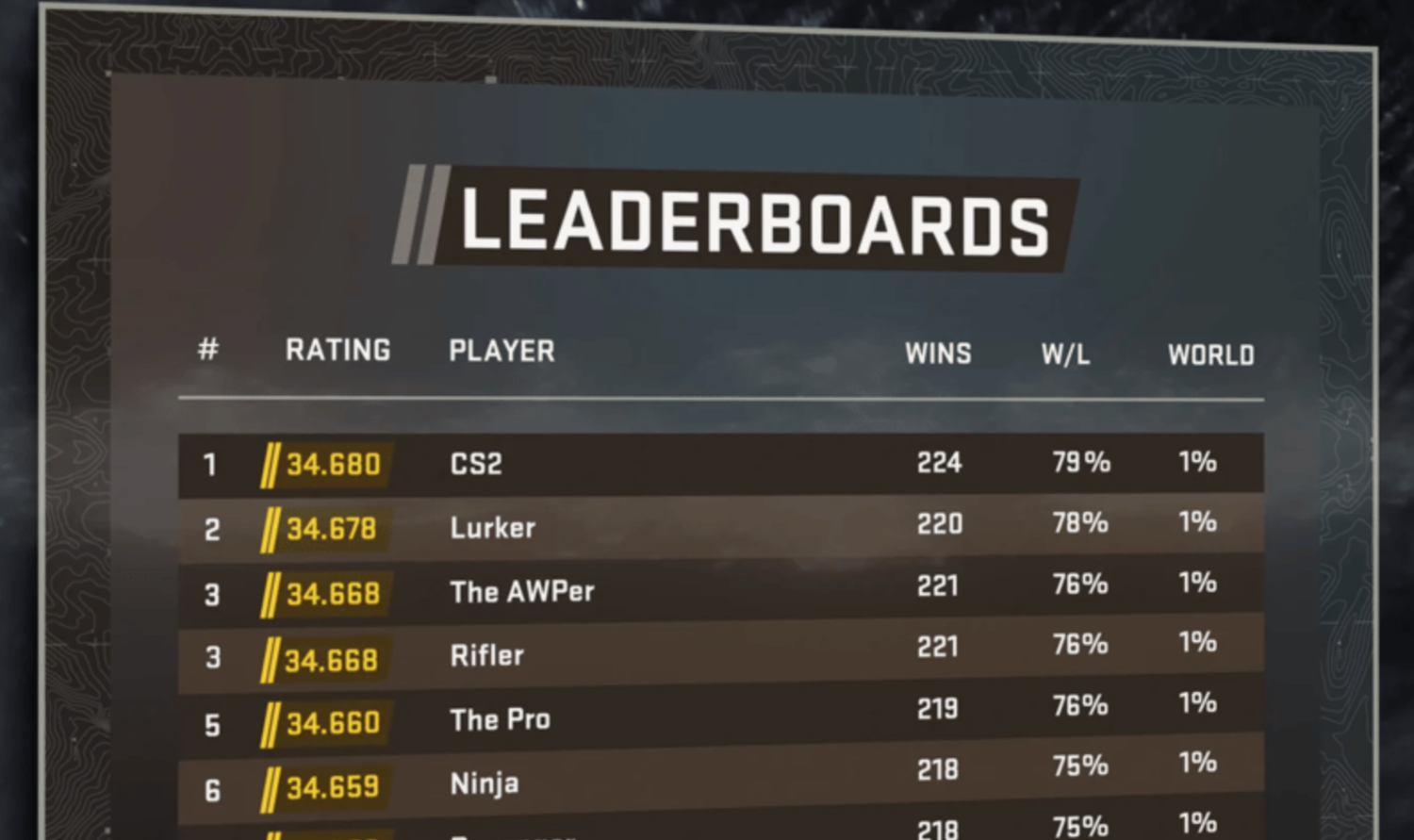
One key feature of the system is that your CS Rating updates immediately after every match ends. Players see the exact change — for example, +137 or -95 — making progress far more transparent than the hidden MMR systems used in most other games.
Visualization note: an infographic showing the seven color tiers alongside their corresponding rating ranges would help readers quickly digest the information at a glance.
How Many Ranks Does Wingman Mode Have?
Classic Wingman mode kept the eighteen-rank system carried over from CS:GO without changes. These icons became the symbol of progression for millions of players worldwide and are instantly recognizable even to people who haven't touched the series in years. The ladder starts at the Silver ranks at the bottom and climbs through Gold Nova, Master Guardian, and Eagle all the way up to the coveted Global Elite.
The full rank structure covers every skill level. The Silver bracket includes six ranks, which are typically where new players and those returning after a long break start out:
Silver I
Silver II
Silver III
Silver IV
Silver Elite
Silver Elite Master
After the Silver ranks comes the Gold Nova bracket of four ranks, where players start demonstrating a basic grasp of tactics and shooting. Meaningful team play and economy management begin to appear at this level:
Gold Nova I
Gold Nova II
Gold Nova III
Gold Nova Master
The Master Guardian bracket spans four ranks at the mid-to-high skill level. Players here have solid aim and solid map knowledge:
Master Guardian I
Master Guardian II
Master Guardian Elite
Distinguished Master Guardian
The top of the ladder consists of four elite ranks that take hundreds of hours of practice to reach:
Legendary Eagle
Legendary Eagle Master
Supreme Master First Class
The Global Elite
So to answer the question directly — CS2 Wingman mode has eighteen ranks, from Silver I to Global Elite. According to Steam statistics, around 40% of players fall somewhere in the Gold Nova to Master Guardian range, making those the most populated brackets in the mode.
Classic Rank Breakdown:
Group | Ranks | Count |
Silver | Silver I – Silver Elite Master | 6 |
Gold Nova | Gold Nova I – Gold Nova Master | 4 |
Master Guardian | Master Guardian I – Distinguished MG | 4 |
Eagle+ | Legendary Eagle – Global Elite | 4 |
Total | 18 |
How Many Wins Does It Take to Get a Rank?
The placement system in CS2 works the same way for both modes — players need to complete ten placement matches before receiving their first rank. However, how each mode evaluates those results differs, which affects where players land after calibration.
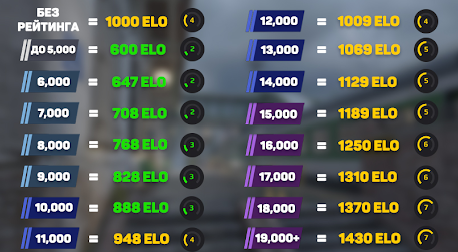
In Premier mode, the system assigns an initial CS Rating after ten placement matches based on a comprehensive assessment. It factors in more than just wins and losses — your individual performance matters too: kills, deaths, damage dealt, MVP rounds, and other stats all contribute. A player who goes 7-3 in placements with a high ADR (average damage per round) can end up with a higher starting rating than someone who went 8-2 but underperformed individually.
Typical Premier placement ranges look roughly like this: 3–4 wins usually land you 3,000–5,000 (Grey), 5–6 wins around 6,000–9,000 (Light Blue), and 7–8 wins with solid stats tend to place you at 10,000–13,000 (Blue). Nine or more wins with dominant performances can push a player into Purple or even Pink, though that's relatively uncommon.
Wingman mode's placements also span ten matches, but the resulting rank is assigned less predictably due to the hidden MMR. The system evaluates not just your current matches but also your account's game history. A fresh account with six wins typically lands around Gold Nova I – Gold Nova III. Seven to eight wins may yield Gold Nova Master or Master Guardian I. Nine or more wins with consistent stats often result in Master Guardian II – Master Guardian Elite.
One important nuance is that the Wingman ranking system uses a hidden Trust Factor score. Accounts with significant hours logged in CS:GO tend to receive higher starting ranks for equivalent placement results. This is designed to deter smurfs and cheaters from inflating fresh accounts.
How Do Rank-Ups and Deranks Work?
The rank change mechanics in CS2 differ significantly between the two modes, creating a distinctly different experience for each. Premier offers a mathematically transparent system, while Wingman preserves an element of unpredictability that many players find more exciting.
In Premier mode, your CS Rating updates after every completed match with an exact breakdown of the points gained or lost. The average swing is around 80–150 points per game, though this can vary. Winning against a team with a higher average rating earns more points (up to 200–250), while losing to weaker opponents costs a disproportionate amount.
The system weighs several factors when calculating Premier rating changes. Individual performance matters — a player who goes 25-10 will lose fewer points in a loss than someone who goes 8-20. MVP rounds, pistol round win rate, first kill frequency, and AWP efficiency all factor into the final number.
To understand the key differences between how the two modes handle rank changes, it helps to look at them side by side. Both systems have their own characteristics that affect the pace of progression and the overall feel of climbing. Premier is built around transparency and precision; Wingman creates a sense of anticipation around rank changes. Knowing these differences makes it easier to choose the mode that fits your goals.
Rank Change Mechanics Comparison:
Parameter | Premier | Wingman |
Rank change visibility | Exact points shown after every match | Hidden MMR, rank icon changes visually |
Average change per win | +80–150 pts (up to +250 vs strong opponents) | Typically 4–7 wins needed to rank up |
Average change per loss | -80–150 pts (up to -200 vs weak opponents) | Typically 3–5 losses needed to derank |
Individual stats counted | Yes (K/D, MVP, damage, first kills) | Yes, but the impact is less visible |
System transparency | Fully transparent | Intentionally opaque |
Inactivity period | 28 days, then rating is hidden | 28 days, then rank is hidden |
Wingman mode operates on a hidden MMR (Matchmaking Rating) that isn't shown to players directly. Ranking up in this mode generally requires a streak of 4–7 wins, though the exact number depends on your opponents and individual performance. The opacity is intentional — the idea is to keep players focused on playing well rather than doing math. Deranking in Wingman is less abrupt; you typically need a streak of 3–5 losses before dropping a rank.
The system also provides a degree of rank protection shortly after a promotion, so you don't immediately drop right after earning a new rank. An extended losing streak will still send you back down eventually, though. One important mechanic shared by both modes is the inactivity timer. If you don't play any competitive matches for 28 days, your rank or Premier rating becomes hidden. Playing one match restores the display, though your rank may have dropped slightly in the meantime — this prevents players from locking in high positions and walking away.
Which Mode Should You Play?
The choice between Premier and Wingman comes down to personal preference and what you're trying to get out of the game. Both modes use ranks to measure skill level, but they suit different types of players and create a fundamentally different psychological experience.
Premier has several key advantages for serious players. The transparent system lets you track your progress with precision — seeing the exact rating change after every match gives you a clear, data-driven picture of your development. Matchmaking in Premier is generally considered more balanced, since the system works with exact numbers rather than broad rank brackets. Professional players and esports organizations use Premier for talent scouting — a high CS Rating is treated as an objective indicator of skill.
Wingman still has unique advantages that appeal to a different audience. The classic icon system is psychologically more satisfying for many players — getting a new visual rank badge feels more rewarding than watching a number change from 12,478 to 13,005. For CS:GO veterans, these icons carry genuine cultural weight — Global Elite and Supreme remain prestigious symbols of mastery. Wingman is also less stressful, since you're never shown exactly how many points you bled after a rough loss.
To make an informed choice between the two modes, it helps to compare their key characteristics directly and figure out which approach fits your play style. Each mode offers a unique progression experience suited to different goals — from casual games with friends to serious tournament preparation. The table below should help you identify which ranking system is the better fit for you.
Mode Comparison Table:
Criteria | Premier | Wingman |
Best for | Serious players, esports competitors | Casual players, CS:GO veterans |
Transparency | Full (exact changes visible) | Low (hidden MMR) |
Psychological comfort | Can create number-anxiety | More comfortable thanks to rank icons |
Matchmaking quality | More precise | Good, but less precise |
Prestige | High numerical rating | Global Elite, Supreme icons |
Esports relevance | Primary metric for talent scouting | Secondary |
Visible progress speed | Updates every match | Changes over win/loss streaks |
For newer players, Wingman is a good starting point — it lets you get comfortable with the competitive format without the constant pressure of watching your numbers shift every game. Once you reach Master Guardian or above, switching to Premier gives you a more precise read on your actual skill level. Players with competitive or esports ambitions should prioritize Premier, since CS Rating is the metric that matters when teams are being formed and tournaments are involved. Worth noting: you can maintain ranks in both modes simultaneously — Premier for serious practice, Wingman for more relaxed games with friends.
How to Check Your Rank and Stats
Tracking your CS2 rank progress and detailed statistics is available directly in the game client and through Valve's official services. To check your current Premier rank, just open the Competitive tab in the main menu — your CS Rating and color tier are displayed on the mode selection screen. The number of matches played in the current season is shown there as well.
In Wingman mode, the rank icon appears in the player profile, accessible through the Steam menu or directly in CS2. Hovering over the icon shows the date the rank was last updated. If the rank is hidden due to inactivity, you'll see a notification prompting you to play a placement match to restore the display.
Detailed competitive match statistics are available in the Player Profile section within CS2. Here you can view your win rate, average kills per match, K/D ratio, accuracy broken down by weapon type, favorite maps, and other metrics. In Premier mode, a graph showing your rating changes over recent matches is also displayed, which is useful for spotting trends in your progress.
Steam also provides basic stats through your web profile. Under Games → Counter-Strike 2 → Personal Game Data, you'll find high-level figures: total hours played, total kills, favorite weapon, and maps with the best win rate. The level of detail here is less comprehensive than what's available inside the game itself.
Visualization note: a screenshot of the profile stats section showing the Premier rating graph, win rate, and other key metrics would effectively demonstrate what information is available to players.
Common Questions About the CS2 Ranking System
Players regularly run into the same questions about how CS2's ranking mechanics work — questions that aren't always obvious from the in-game interface.
Can you play both modes at the same time?
Yes — Premier and Wingman are fully independent. Progress and ranks in one have no effect on the other. You can have a high CS Rating in Premier and be sitting at Gold Nova in Wingman, or the other way around.
Does Prime status affect your rank?
Prime Status (obtained by reaching account level 21 or purchasing it) doesn't directly affect calibration or rank changes. However, it does influence your Trust Factor and the quality of your matchmaking pool — with Prime, you're significantly less likely to run into cheaters and disruptive players. Indirectly, this can help you climb, since matches become more predictable and fairer overall.
What happens to your rank after a long break?
After 28 days without playing any competitive matches, your rank becomes hidden. One match brings it back. In most cases there's a slight drop on return — one or two divisions in Wingman, or 500–1,000 points in Premier — as the system checks that your skills are still at the level it expects.
Do ranks reset each season?
CS2 doesn't do hard rank resets between seasons like some other games. Valve does occasionally run soft recalibrations, though — in March 2024, for example, all Premier players went through a five-match recalibration to correct distribution imbalances across the rating spectrum. Wingman sees fewer global resets, but the system may prompt you to play a calibration match after major balance updates.
Understanding these nuances helps players get a clearer picture of how the ranking system actually works and avoid some of the most common misconceptions about it.
Climb to the Top
Counter-Strike 2's ranking system gives you two paths to prove your skill — the seven color tiers of Premier with its transparent CS Rating, and the eighteen classic Wingman ranks running from Silver I to Global Elite. Every player can find the approach that fits their goals and mindset.
Premier suits players who value precision and are pushing toward a professional level of play. Wingman preserves the spirit of classic CS:GO with those iconic badges every veteran knows by heart. Whichever path you choose, the fundamentals are the same: consistently work on your aim, study the maps, communicate with your team, and review your own mistakes.
The climb from the Grey zone in Premier or Silver I to Yellow and Global Elite takes hundreds of hours of practice — but every rank-up along the way is a reward you actually earned. Pick your mode, grind your placements, and start working your way up.
