


Anyone new to CS2 eventually asks the same question — what is Premier mode and why does it exist when Competitive is already right there. Premier is CS2's main competitive format, built around the numerical CS Rating system, a map veto phase before every match, and a global leaderboard. Valve designed it in response to what the community had been asking for: transparent progression, a clear ranking system, and conditions as close to the professional scene as possible. This is where players come when they're not just looking to play — they're looking to actually compete.
How Does CS2 Premier Differ from Regular Competitive?
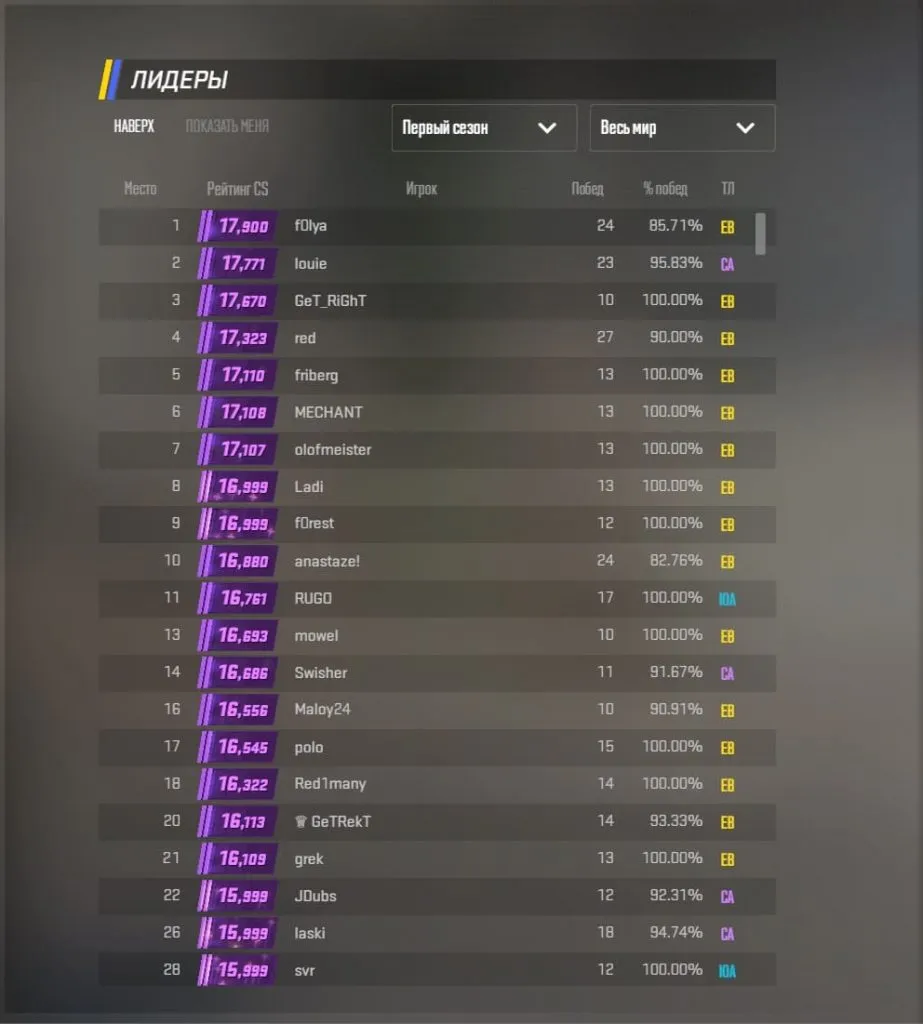
Understanding the difference between the two modes is the first thing to sort out before queuing. On the surface they look similar: 5v5, bomb defusal, rounds. But under the hood they work in fundamentally different ways. Premier uses a single numerical CS Rating instead of the familiar Silver-to-Global-Elite rank system, and that rating isn't tied to any specific map — it's one unified number. In Competitive, you earn a separate rank on each map, which lets you specialize; in Premier you have to play the entire map pool, no exceptions.
Feature | Premier | Competitive |
Rank system | CS Rating (0–35,000+) | Silver – Global Elite |
Per-map rating | No, unified across all maps | Yes, separate rank per map |
Map selection | Pick and ban phase | No veto |
Global leaderboard | Yes | No |
Entry requirements | Prime Status | Prime Status + matchmaking unlock |
Match format | MR12 (first to 13, draw possible) | MR12 (first to 13, draw possible) |
The most practical consequence of this difference: in Competitive you can grind fifteen matches on your favorite map and feel completely comfortable. In Premier, that approach falls apart — a random map from the pool can tank your rating if you're not ready for it. Competitive is increasingly seen as a practice space; Premier is the main arena for anyone who wants real competition and an honest reflection of their skill in numbers.
How Does the CS Rating System Work?
This is what most players come to Premier for — clear, transparent progress. CS Rating is a numerical value from 0 to 35,000+, displayed on your profile and determining your position on the leaderboard. Unlike the old CS:GO system where your rank could shift in ways that felt completely arbitrary, Premier shows you before every match exactly how many points are on the line — both for a win and a loss. That changes how the game feels: every match carries weight, every result has predictable consequences.
To receive a CS Rating, you need to win 10 placement matches — win them, not just play them. Until those 10 wins are in, no rating appears on your profile and you won't show up on the leaderboard.
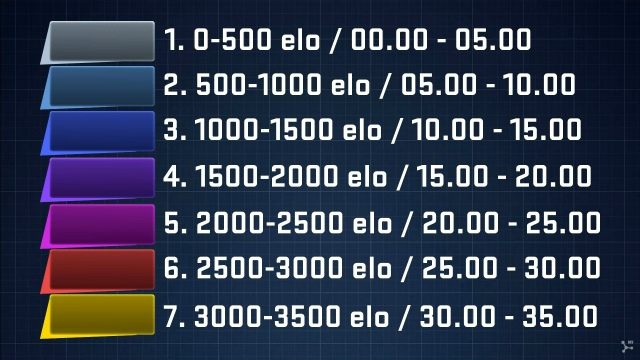
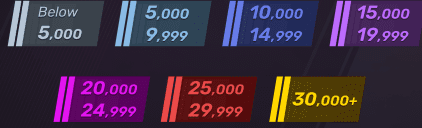
CS Rating Range | Color Tier |
0 – 4,999 | Gray |
5,000 – 9,999 | Light Blue |
10,000 – 14,999 | Blue |
15,000 – 19,999 | Purple |
20,000 – 24,999 | Pink |
25,000 – 29,999 | Red |
30,000+ | Gold |
There's one important nuance that surprises a lot of players: personal stats — kills, assists, MVPs — have no effect on CS Rating changes. Your rating shifts based purely on the team result: win or loss. The size of that shift is locked in before the match starts and depends on your opponents' rating level and your current streak. A win streak amplifies the rating gain; a loss streak amplifies the drop. In Premier, you can't carry your rating with a great individual performance — only the team result matters.
What Is the Map Veto Phase in Premier?
While Competitive drops you onto a random map, Premier starts every match with a veto process — the same ban system used in professional tournaments. This is what makes Premier strategically richer: you can knock out the opponent's strongest map or force an uncomfortable pick before the first round even begins. It's a mini-match in its own right, played out right there in the lobby.
From the seven maps in the active pool, both teams alternate banning maps until one remains. The first team controls the majority of the bans; the second team gets to choose sides on the final map. Every step requires at least some minimal communication — this isn't something you can approach by clicking randomly.
Premier veto order:
Team A ban
Team B ban
Team A ban
Team B ban
Team A ban
Team B ban
Remaining map is played
A good veto isn't just about banning your least favorite maps. Experienced players check the opponents' stats right during the ban phase — the interface shows which maps the other team tends to prioritize. That information lets you make an informed decision and step onto the map with a real edge before the game has even started. That level of tactical depth — before round one — is exactly what sets Premier apart from every other format in CS2.
What Maps Are in the Premier Pool in 2026?
The Premier map pool matches the Active Duty pool — the same maps used at professional Majors. Valve updates it at the start of each season, and the changes affect not just players but the professional scene directly.
Current Premier pool (Season 4, from January 22, 2026):
Ancient — jungle setting, tight corridors, mid control determines the outcome of most rounds.
Anubis — Egyptian theme, historically T-sided with plenty of dangerous angles.
Dust II — the legendary classic with long sightlines and a straightforward layout.
Inferno — tight fights in apartments and on banana, heavy utility usage throughout.
Mirage — well-balanced map, iconic at every level of play.
Nuke — unique vertical mechanics, traditionally CT-sided.
Overpass — tactical map centered around water control and the connector.
Knowing all seven maps is a prerequisite for steady improvement in Premier. You can't simply exclude uncomfortable maps from your personal pool — the veto is a team process, and if five players haven't coordinated, landing on an unfamiliar map is a very real possibility. It's worth preparing before jumping into Premier — at the very minimum getting a basic grasp of positions and utility on each of the seven maps.
How to Unlock Premier Mode
Getting into Premier requires checking a few boxes. Simply downloading the game isn't enough — CS2 is free, but Premier sits behind a paid status tier, and that's intentional: the paywall filters out a significant portion of cheaters and smurf accounts.
What you need:
Prime Status — purchased on Steam for $14.99, a one-time payment permanently tied to the account.
A baseline XP level — a small amount of playtime in other modes is required before the Premier tab unlocks.
10 wins in placement matches — only after those are done does your CS Rating appear and the leaderboard become accessible.
After purchasing Prime Status, a dedicated Premier tab appears in the CS2 main menu. The player works through 10 placement matches and the system assigns an initial CS Rating. One important note: players without a CS Rating cannot queue alongside players who already have one — this ensures fair calibration. Premier without Prime Status is effectively a closed door, and the first step is always the same: buy Prime.
Prime Status doesn't just unlock Premier — it also adds weekly skin and case drops, access to exclusive rewards during Majors, and placement in a separate matchmaking pool with a noticeably cleaner environment. The price hasn't changed in years and remains fixed: $14.99, no discounts, purchased directly through Steam.
How Do Seasons and Leaderboards Work in Premier?
Premier is structured around seasons, and it's important to understand this from the start. At the beginning of each new season, everyone's CS Rating resets, and the placement process starts over: another 10 wins, another rating assignment. The season launch is always the most active phase — queues are packed and matches are especially unpredictable.
Once you have a rating, three types of leaderboards become available:
Global — the entire world, thousands of players.
Regional — Europe, North America, South America, Asia, Africa, Oceania.
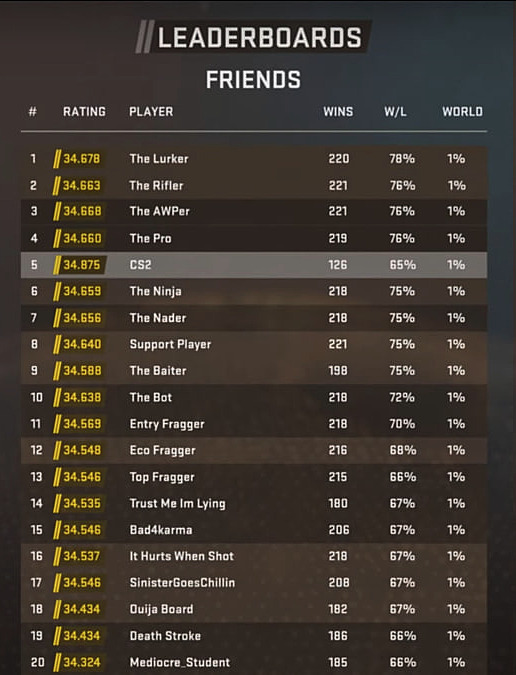
Friends only — rating comparison within your own circle.
Cracking the top of the global or regional leaderboard is a challenge for very few. But even just tracking your position among friends is its own motivator to keep playing. At the end of each Premier season, players who have earned at least 10 wins and received a CS Rating get a season medal. It's displayed on your Steam profile and reflects the peak rating you reached that season — the higher the rating, the more prestigious the medal.
One additional detail: your CS Rating is only considered active if you've played at least 25 matches in the mode during the current season. Drop below that threshold and the rating can become inactive. This is designed to encourage regular play rather than occasional appearances just to lock in a nice number on your profile.
Premier or FACEIT — Which Should You Choose?
One of the most common questions from players who've gotten their bearings in Premier: is it worth staying there long-term, or should you just head straight to FACEIT? Both offer structured competitive play, but they work differently. Premier is Valve's official format, built directly into the game — no third-party site registration, no extra client to install.
Feature | Premier | FACEIT |
Platform | Built into CS2 | Third-party site + client |
Rating system | CS Rating (0–35,000+) | Levels 1–10 + Elo |
Anti-cheat | Valve Anti-Cheat (VAC) | FACEIT Anti-Cheat (separate client) |
Leaderboard | Official, global | FACEIT's own |
Cost | $14.99 (Prime, one-time) | Free / Premium subscription |
Prime required | Yes | Yes (for new accounts since 2025) |
FACEIT has traditionally offered stricter anti-cheat and historically higher match quality at the top end — which is why pro players preferred it even back in the CS:GO era. That said, since 2025 FACEIT requires Prime Status for new accounts, meaning the $14.99 is unavoidable either way. Premier remains the natural entry point: easier to get started, more straightforward system, and a solid place to honestly assess your level before going further. Many players run both — Premier for the official leaderboard and consistent play, FACEIT for sharpening skills in a more demanding environment.
Should You Start Your Competitive Journey in Premier?
In short — yes, that's exactly where to start. Premier is the only official way to earn a numerical CS Rating, appear on the global leaderboard, and play in conditions that mirror the professional scene as closely as possible. The map veto, transparent rating system, and seasonal medals all combine to make Premier not just a game mode, but a fully structured competitive format with a clear progression system.
One word of advice for newcomers: before jumping into Premier, get the basic mechanics down in Deathmatch and Competitive, learn at least a few maps from the active pool, and get a handle on the round economy. Premier doesn't forgive arriving completely unprepared — rating drops fast and climbing back without the skills is an uphill battle. But for anyone who comes in ready, they'll find exactly what Counter-Strike has been about for more than twenty years.
