


Counter-Strike 2's in-game economy has long exceeded simple collecting. Among many mechanics, one stands out particularly — CS2 crafting, allowing you to obtain rare skins from accessible items. Through it, you can create your dream weapon or build an aesthetic inventory based on calculations, analytics, and a fair share of luck.
Crafting mechanics seem simple at first glance: a player combines ten skins of the same category and collection to receive one of higher tier. However, there's an entire system behind this. Understanding what CS2 skin crafting is means figuring out trade nuances, float values, drop chances, and economics of collections that no longer drop.
How Crafting Works in CS2: Principles and Rules
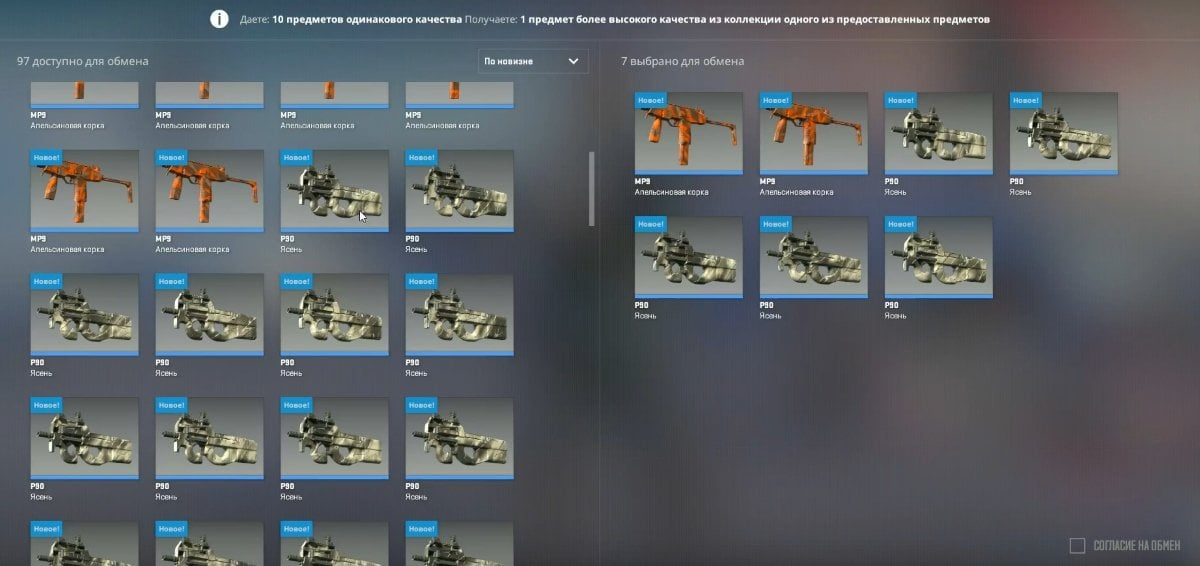
CS2 crafting is Valve's official trade-up contract built into the inventory interface. To use it, you just need ten items of the same quality category (for example, Mil-Spec or Restricted), preferably from one collection. After selecting skins, the player confirms the operation, and the game randomly issues a new higher-tier skin.
Basic conditions:
All 10 items must be of the same rarity tier.
Best results are achieved using items from one collection — this increases chance of getting the desired result.
New item's rarity will be one tier higher than used ones.
The crafting system is random but not chaotic: the final skin is chosen from all possible items of the needed category represented in the craft. If all skins are from one collection, the result is guaranteed to be from that collection. If from two — 50/50. These rules form the entire crafting economy.
What Types of Crafts Do Players Use?
Several approaches to using crafts have long formed in the CS2 community. Some players invest for expensive or rare skins, others create collections for aesthetics. Regardless of motive, CS2 crafting remains a customization method available to everyone.
Main types:
Expensive crafts — goal: obtain elite skin like AWP | Gungnir or M4A1-S | Hot Rod.
Aesthetic crafts — for float value, visual cleanliness, or symmetry.
Collectible — targeting historical collections (Dust2, Cobblestone, Ancient).
Fun crafts — creating amusing or unique combinations, for example, with minimal floats or meme names.
For example, some players create entire inventories with clean skins assembled through CS2 crafting, focusing exclusively on aesthetics.
Why Do Some Crafts Cost More Than the Skin Itself?
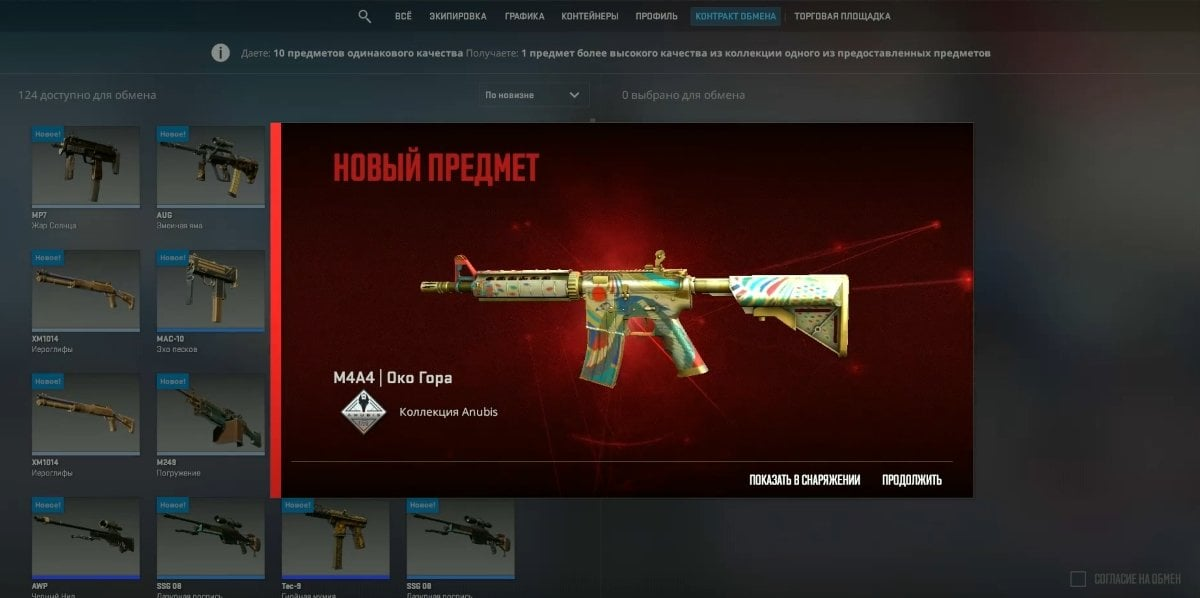
The system's key feature is its unpredictability. Even if the goal is to get a $400 skin, crafting can cost $800-$1200. The reason is simple: success chance is often only 10%, while ingredient cost is high. The chance isn't fixed. It's calculated strictly by formula:
Number of possible skins of needed tier from selected collections / total number of possible tier skins.
Examples of expensive crafts:
Craft Goal | Collection | Final Skin (Cost) | Success Chance | |
AWP | The 2021 Mirage Collection | $1400–$4000 | ≈10% | |
AWP | The Norse Collection | $9000–$1800 | 10% | |
M4A1-S | The Chop Shop | $2600–$3600 | about 20% (if using two collections) |
Such CS2 crafts are done primarily by collectors. For them, it's not so much the outcome that matters but the very fact of owning a manually assembled item. Each action requires precise understanding of prices, statistics, and risk.
Which Collections Are Most Often Used for Crafting?
Within the community, a list of most sought-after collections has long formed, which traders and collectors consider first when planning crafts. The reason lies in their rarity, aesthetics, and high cost of final skins. These collections either no longer drop or are only available through operations and capsules, making them especially valuable. Many skins from these sets can't be obtained otherwise except through CS2 crafting, which additionally fuels player interest.
Some collections have completely disappeared from regular game drops, and now their elements can only be purchased on the marketplace or obtained through exchange. This means their availability is limited to the quantity of items already in circulation, meaning craft ingredient prices gradually rise. Players understanding skin economics consider this factor and bet on long-term perspective — especially when it comes to crafting skins that can become investment-attractive.
Most popular collections for crafting:
The 2021 Mirage Collection — allows obtaining AWP | Desert Hydra, one of the most desired and expensive sniper rifle skins. Contracts for it are among the most expensive in-game: ingredient cost often exceeds $1400–$4000, while the final skin is valued at $1,590+ (depending on float). This is one of the most popular but risky contracts.
The Norse Collection — contains the iconic AWP | Gungnir, which only the most experienced players craft. Ingredient cost usually starts from $1500–$18000, with the same 10% chance. Gungnir's final price is around $12,770, making this craft extremely expensive and rare.
The Control Collection — gives a chance for M4A1-S | Blue Phosphor, one of the most beautiful and liquid M4A1-S skins. Its cost stays consistently high, and contracts from this collection are valued among traders thanks to visual aesthetics and good demand dynamics.
The Canals Collection — valued for skins like USP-S | The Traitor. Contracts for it cost less than Desert Hydra, but drop chance and value still make this CS2 craft attractive.
The Chop Shop Collection — known for M4A1-S | Hot Rod, which still maintains stable market value. Players often use this collection for crafting clean, glossy "old school" style skins.
Interestingly, not all these collections have the same entry cost. For example, Ancient crafts may require expenses from $1000 and up, while Canals or Chop Shop in some cases cost ~$800–1200+, but with lower probability of obtaining a highly liquid result. This makes each CS2 craft attempt an individual decision where not only desire to get a specific skin is considered, but also risk level, personal preferences, and Steam marketplace trends.
It's also important to remember that Valve can change drop pools at any time, and a collection that was still available yesterday may become unattainable tomorrow. Therefore, experienced players buy needed items in advance and plan CS2 crafting based not only on current prices but also forecasts for demand and rarity.
How Does Float Affect Craft Results?
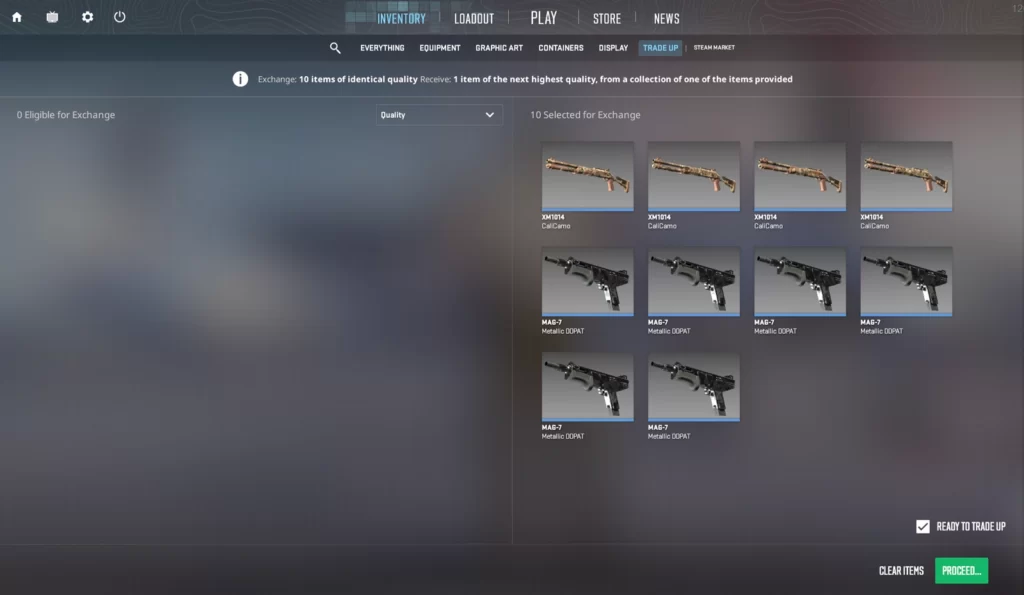
Float is a wear coefficient that determines a skin's visual condition: from Factory New to Battle-Scarred. In crafts, it plays a key role: the final float is the arithmetic average of all 10 invested items.
To get a Factory New skin through crafting, all 10 items need to have very low float. Moreover, the final float can't be lower than the best among invested ones.
Example:
If you use 10 skins with float 0.01, the result will be approximately 0.01. But if even one of them has float 0.15 — the result won't be Factory New anymore.
That's precisely why traders use special float calculators.
What Happens to Stickers During Crafting?
The definitive answer: all stickers disappear. Contracts don't preserve visual elements that were on skins. Therefore, using items with rare or expensive stickers is unprofitable.
Nevertheless, some players consciously sacrifice items with stickers for perfect float or obtaining a rare skin. In most cases, if stickers are valuable (for example, Crown Foil or Katowice 2014), they're first resold, and only then is the clean item used for crafting.
What Mistakes Are Most Often Made During Crafting?
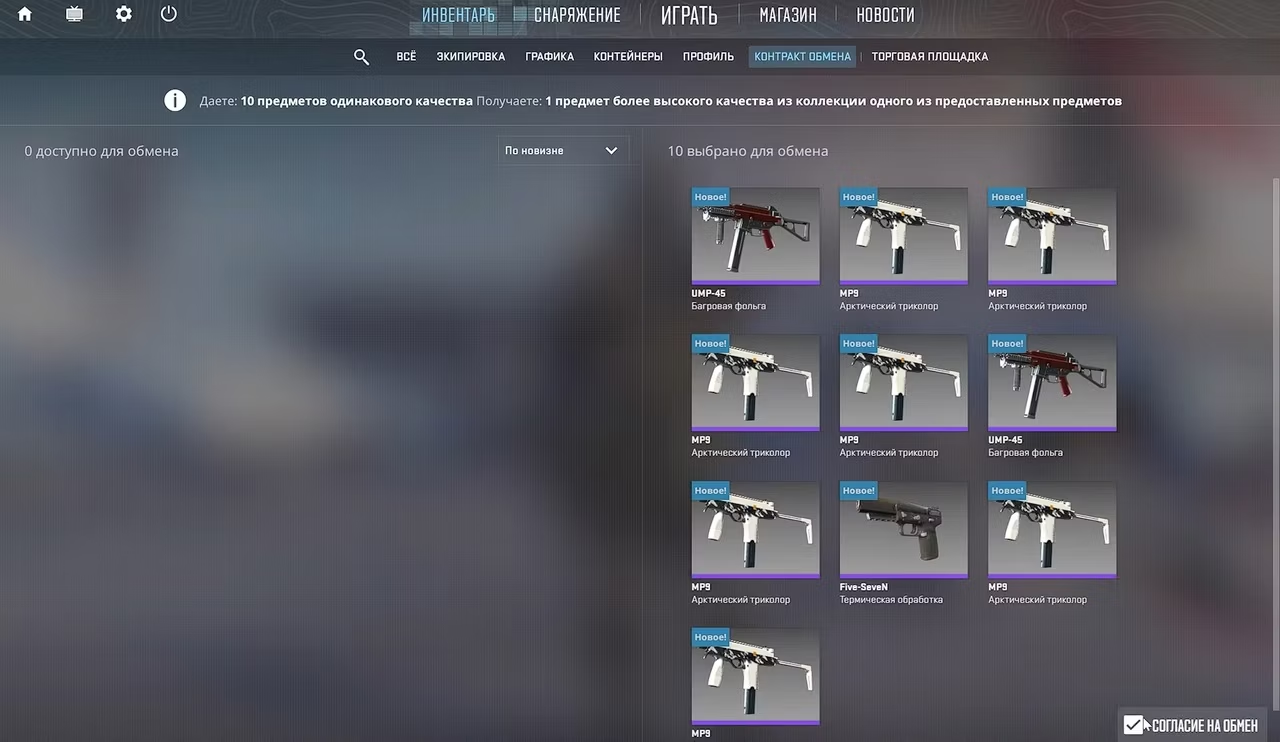
CS2 crafting isn't just mathematics but also risk. Many beginners make the same mistakes, losing money or not achieving desired results.
Before moving to the error list, it's important to note: each can cost tens or hundreds of dollars, especially when working with collections that no longer drop.
Common crafting mistakes:
Using items from different collections → reduces chance of getting needed skin.
Ignoring float → final skin may not be in needed condition.
Using items with expensive stickers → they disappear.
Overestimating chances → many forget that chance for needed result is only 10%.
Unchecked prices → before crafting, it's important to check with Steam.
Before clicking "Accept," it's better to double-check contract composition and ensure its feasibility.
Can You Profit From Crafting?
In practice — CS2 crafting is more often unprofitable. Its main goal is to obtain a desired item, not to profit. Traders prefer reselling, not contracts. However, there are exceptions.
If collecting cheap ingredients and guessing float correctly, the final skin may cost more than production cost. But even then, you should consider commission, taxes, and skin liquidity.
For example, AWP | Gungnir craft can cost $1400, and you can sell it for $2000 — but this is a rare success, not the rule.
How Safe Is Crafting: Is There VAC Risk?
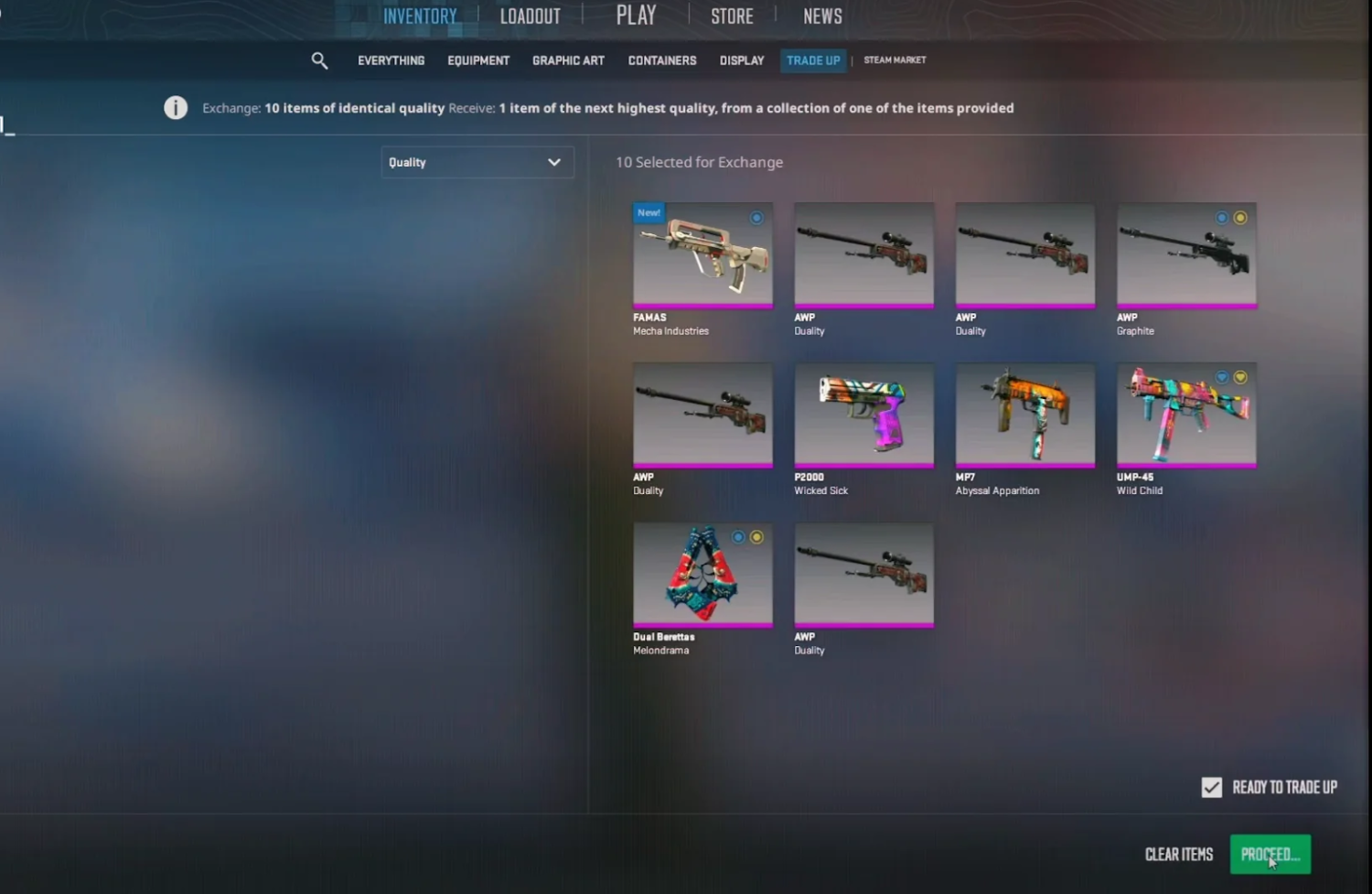
Trade-up contracts are an official mechanic built into the CS2 client. Crafting is absolutely safe: Valve allows using this function. Getting banned for it is impossible.
The only thing to consider — don't confuse with external sites and lotteries. These are most often sources of fraud. Everything happening in the official Steam client is safe.
Conclusion: Is Crafting Worth It?
CS2 crafting is excitement, strategy, and beauty. It allows not just obtaining a rare item but also participating in a unique creation process. For many, it's a form of self-expression and a way to deepen into game mechanics.
CS2 crafting doesn't guarantee profit but gives a sense of control and creativity. And with correct calculations, understanding of float and prices — it can become both profitable and aesthetically pleasing solution.
