


Skins in CS2 give no gameplay advantage at all: damage, accuracy, fire rate and hitboxes are exactly the same with or without a skin. What they do give you comes down to three things: a way to express your style, the appeal of collecting, and real value, because a skin is a tradable item you can swap or sell for actual money. Below we look at why players collect skins, the legitimate ways to get them in CS2, and how to avoid losing your inventory through a careless click.
Skins first appeared in CS:GO with the Arms Deal update in August 2013, and when Counter-Strike 2 replaced CS:GO in September 2023, every inventory carried over. Today, cosmetics in CS2 let you change the look of:
weapons, including knives;
gloves;
agents, the characters you play as.
On top of that, you can apply stickers to weapons, and since the Armory update in October 2024 you can attach charms as well. None of this touches combat stats: the game does not get easier, and the strength of an account depends only on the player behind it. What a good inventory does is make your loadout feel like your own, and StatTrak versions add a kill counter to the weapon. There is also a very practical argument for owning skins: you can trade them and sell them.
Trading and the skin economy
Trading is one of the main ways players build an inventory. Many people end up with items they do not care much about, so it makes sense to swap them for something they actually like. Trade chains can get long: several inexpensive skins are often traded up for a single mid-tier item. The full process is covered in our guide on how to trade skins in CS2.
Trades on Steam go through trade offers. You send an offer using the other player's trade link and confirm it in the Steam mobile app. Check that the link follows the format "https://steamcommunity.com/tradeoffer/new/?partner=..." and that the trade window contains exactly the items you agreed on. A common scam is to swap a skin for a similar-looking, much cheaper one at the last moment.
Since July 2025, CS2 trades fall under Trade Protection: the sender can reverse any trade within 7 days through their Steam trade history, and the items you receive are locked for that period, so they cannot be traded again or sold on the Steam Community Market. More details are in our article on Steam Trade Protection.
Bots and trading sites automate much of this process, and technically buying on a marketplace is not very different from a trade. The difference is in the details: who holds the items during the deal, what fees apply, and whether you can withdraw money afterward.
Trade-up contracts
The trade-up contract is a mechanic built into CS2: 10 skins of one rarity are exchanged for 1 skin of the next rarity up, all the way to Covert. Since the October 2025 update there is a second option as well: exactly 5 Covert skins (all normal or all StatTrak) produce a random knife or pair of gloves from the collections and cases those skins belong to. Step-by-step explanations are in our articles on what a trade-up contract is in CS2 and crafting knives and gloves.
Contracts call for some math. Quite often the result is worth less than the ten skins you put in, so before signing it is worth comparing the cost of the inputs with the prices of every possible outcome. The chance of getting a particular item depends on how many inputs you used from each collection and how many items of the target rarity those collections contain.
The finer points of trade-ups
The outcome is always drawn from the collections your input skins belong to. Normal items cannot be mixed with StatTrak ones: weapons with a kill counter only go into contracts with other StatTrak skins. A standard 10-item contract can raise rarity no higher than Covert, and knives or gloves can only come from the separate 5-Covert contract.
Keep in mind that most contracts lose value on average: you pay for a chance, not for a guaranteed item. Specific "profitable recipes" stop working quickly because market prices keep moving. Only a long series of contracts smooths out the randomness; a single contract guarantees nothing.
Float is the other factor to watch. The wear of the resulting skin is calculated from the float values of the inputs, so to get a high-quality result you need low-float inputs, and collecting enough of them takes time. That leads to the basic rule: patience pays. Build up your inputs carefully and work out the expected result before you commit.
A few more facts for traders
Skin prices change constantly, but certain events move them noticeably: the release of new cases and collections, major game updates, Majors and Steam sales. Following CS2 news helps you spot these moments early instead of reacting after the fact.
Always account for fees. When you sell on the Steam Community Market, Valve keeps 15% (5% for Steam plus 10% for CS2), and Steam Wallet funds cannot be withdrawn as cash. On LIS-SKINS you can sell skins instantly and withdraw real money, and buying the exact skin you want directly is almost always cheaper than trying to unbox it. Whether skins make sense as a long-term holding is covered in our piece on CS2 skins as an investment.
Pay attention to wear in every deal, because it affects both the look and the price of the same skin. Nobody can predict prices precisely, and during unstable periods on the market even patterns that used to hold can break down. A few more recommendations:
compare prices across marketplaces before you buy;
do not overlook mid-priced skins, which are usually easier to resell than rare expensive items;
take your time with trades and negotiate.
In-game drops
The simplest way to get skins in CS2 for free is the weekly drop. Accounts with Prime Status receive a reward when they level up their profile: the game offers 4 items, and you can claim 2 of them. The choices can include cases, graffiti and weapon skins. The weekly cycle resets on Wednesday at around 01:00 UTC, and unclaimed rewards do not carry over to the next week. The system is explained in detail in our article on how case and skin drops work in CS2.
You can keep the items you receive, trade them or sell them. Truly valuable items rarely show up in these drops; most drop skins are worth anywhere from a few cents to a dollar or two. Still, it is a steady trickle of free items that adds up over months of play.
Another way to add to your inventory is the Armory. With a paid Armory Pass (40 stars), players earn charms, collection skins and cases. It is a structured way to get specific items, but it is not free.
What else to know about skin rarity
An item's color shows its rarity, which tells you how often it appears. The full system is explained in our article on how Valve determines skin rarity. These are the official odds for weapon cases:
White (Consumer Grade) and light blue (Industrial Grade): the most common tiers, never found in cases.
Blue (Mil-Spec): 79.92% of case drops.
Purple (Restricted): 15.98%.
Pink (Classified): 3.20%.
Red (Covert): 0.64%.
Gold (★ knives and gloves): 0.26%, roughly one item per 385 cases.
Contraband sits in a category of its own. Only one skin has this rarity, the M4A4 | Howl: it was pulled from cases back in 2014, no new copies can appear, and a Field-Tested one currently costs around $4,100.
Knives and gloves never come from weekly drops. You get them from cases, through the 5-Covert trade-up contract, or by buying them from other players. Weekly drops also require Prime Status, which is the same status that unlocks Premier matchmaking.
Giveaways
Beyond the official drop system, skins are given away by official tournament organizers, well-known players, casters and verified streamers. Entry usually means following an account or sharing a post. Your odds of winning are low, but so is the risk, as long as the giveaway is run by a real, verified creator.
Be very careful with websites that promise "free skins". Many of them are scams or gambling platforms in disguise: they phish for your Steam login with fake sign-in pages, send forged trade offers or try to steal your API key. Beyond losing items, you risk losing the whole account.
Never enter your Steam login and password on third-party sites.
Never share your Steam API key with anyone.
Check the page address before you sign in or confirm a trade.
Tournaments and competitive platforms
Skins sometimes serve as prizes in tournaments and leagues, including those on third-party competitive platforms such as FACEIT. These events attract strong players, and the experience helps well beyond climbing the ranks. Qualifiers need a lineup you can rely on, so teams look for experienced players with a proven level rather than filling a slot with anyone available.
Read the rules of every tournament carefully: some award skins, others pay out money or a platform's internal currency. Make sure the event is run by a known organizer, and ignore links to "tournaments" sent by strangers.
How to find a trustworthy place
Choose sites for trading, buying and competing with care. There are plenty of cases where players lost an entire inventory because of a single careless click. If a stranger sends you a link, do not open it; only visit sites you have found and checked yourself.
Your best line of defense is the Steam Guard Mobile Authenticator. Without it, Trade Protection does not apply in the usual way and trades are held for 15 days instead. The extra confirmations may feel tedious, but they block most account-theft schemes. Read forums and community guides, and keep a short list of sites you trust. More tips are in our article on protecting your inventory from scammers.
You got a CS2 skin: what next
As mentioned above, a skin will not help you aim better or win more duels. The enjoyment is aesthetic and collectible. Even so, some players are ready to pay very large sums for rare items.
The reason is simple: in a game where people spend hundreds of hours, it is nice to look at weapons you actually like, especially when you got a rare item yourself. Skins are also the foundation of the whole CS2 economy. Every new collection and case keeps interest in the game alive, which is why Valve puts real effort into making them attractive.
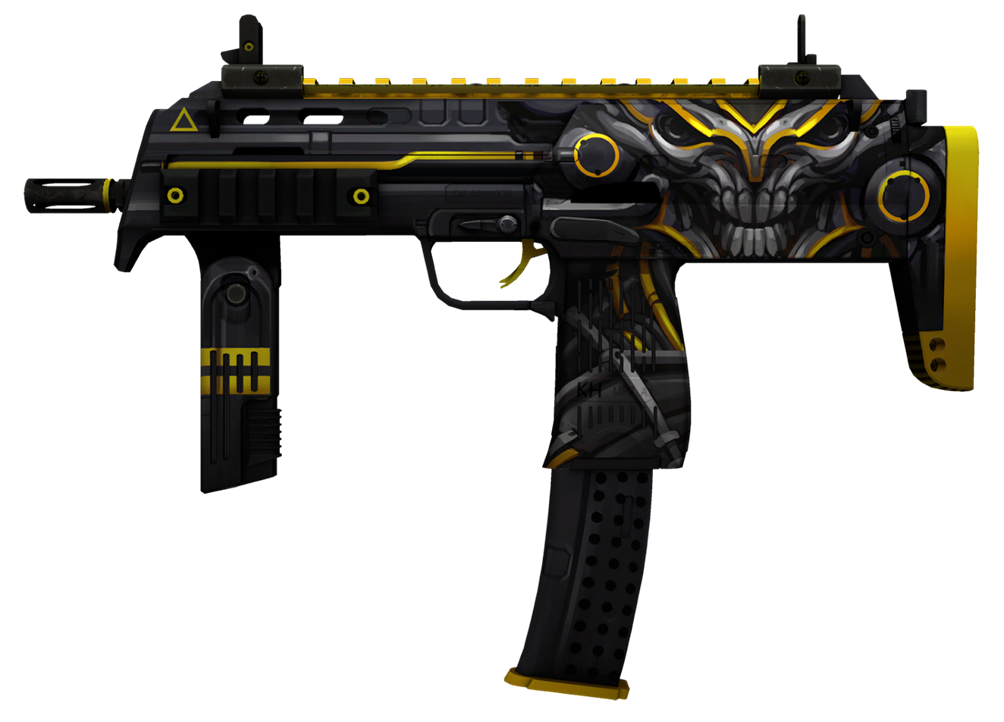
Once you have a skin, you can use it in matches, decorate it with stickers and a charm, trade it for something else, or sell it on LIS-SKINS and withdraw the money.
A few final notes
To use the Steam Community Market, your account must not be limited, which means spending at least $5 on it. You also need the Steam Guard Mobile Authenticator enabled. Without these, you cannot buy or sell skins inside Steam.
The Market shows price history charts that make it easy to judge how a skin's price has moved. Cases work differently: a random number generator decides what drops, so opening cases in search of a specific skin almost always costs more than buying it outright. Factor in fees, keep your account secure, and for an overview of other ways to build an inventory, see our article on how to get skins.
