


To increase your Behavior Score in Dota 2, you need three things: finish every match, avoid reports and earn commends from teammates on a regular basis. The score does not change after each game; it is recalculated every 10 matches, so the first visible changes usually show up after two or three weeks of steady, clean play. There is no way to boost it instantly: the system collects a track record and responds only to consistent behavior.
Most players start paying attention to it when matches get noticeably worse: teammates abandon, chat turns hostile and coordination disappears. Below is how to check your score, what lowers it and which plan actually gets you out of low-behavior lobbies.
What Behavior Score in Dota 2 Is and Why It Matters
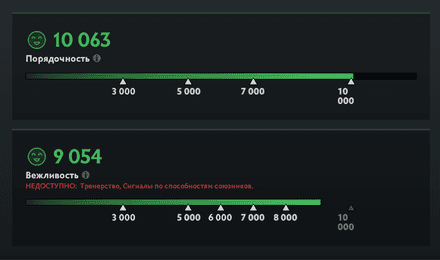
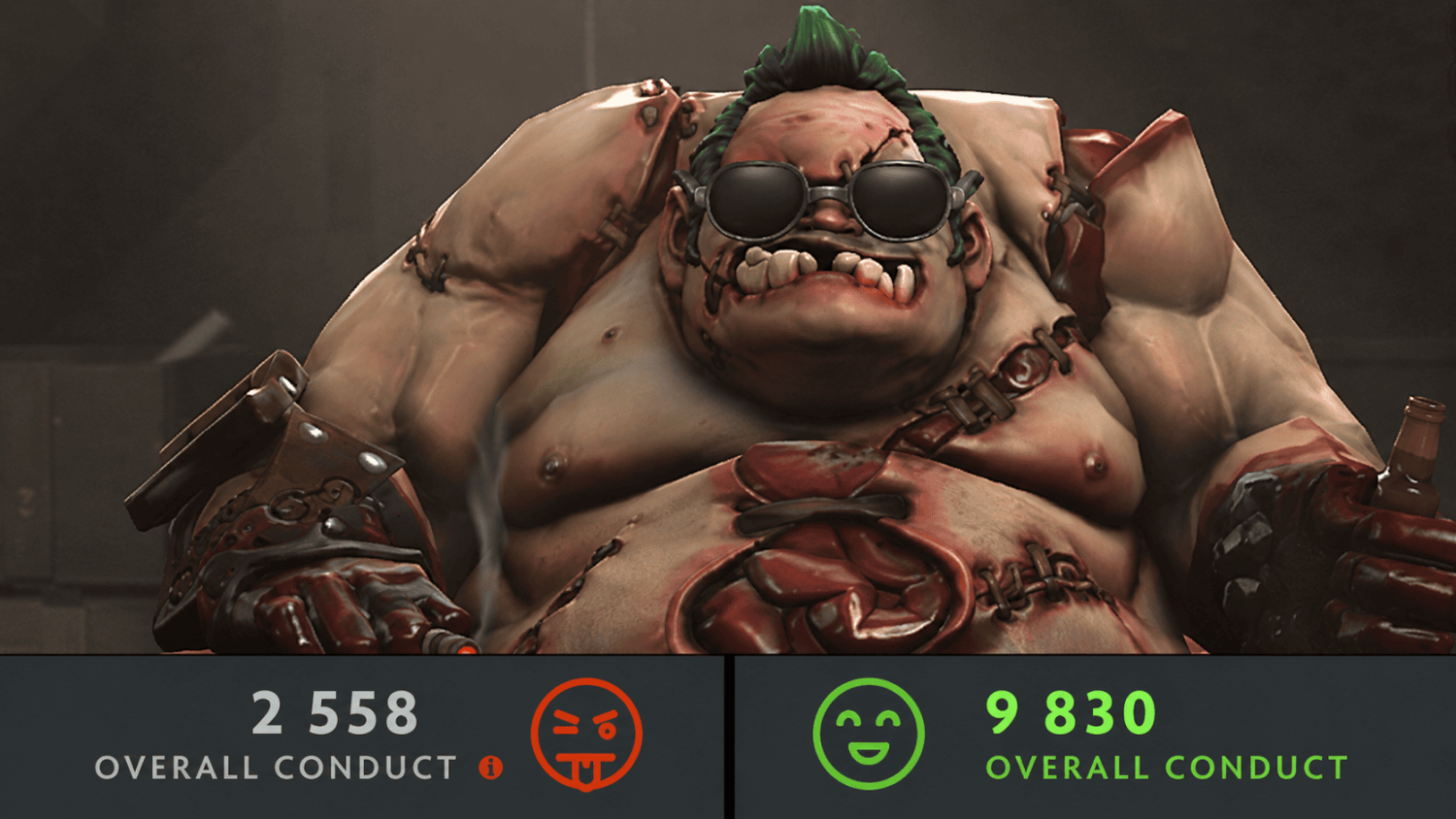
Behavior Score is the system Valve uses to rate how each player conducts themselves in game. The scale runs from 1 to 12,000, and a higher number means a better reputation. The logic is simple: commends push the score up, while reports and abandons pull it down.
Plenty of players treat it as cosmetic, but it has a direct effect on your games. Behavior Score decides who you get matched with: in practice it works like a second MMR that measures conduct instead of skill. The lower your score, the more likely you are to land in matches with players who give up in the first minutes, yell in voice chat and leave at the first setback. Your rank itself does not change, but match quality drops, and climbing your MMR in Dota gets harder.
How to Check Your Current Behavior Score
Before working on your score, find out where it stands. Many players have not opened this section in years and have no idea what their numbers look like.
You can check it right in the client in under a minute:
Launch Dota 2 and open your profile.
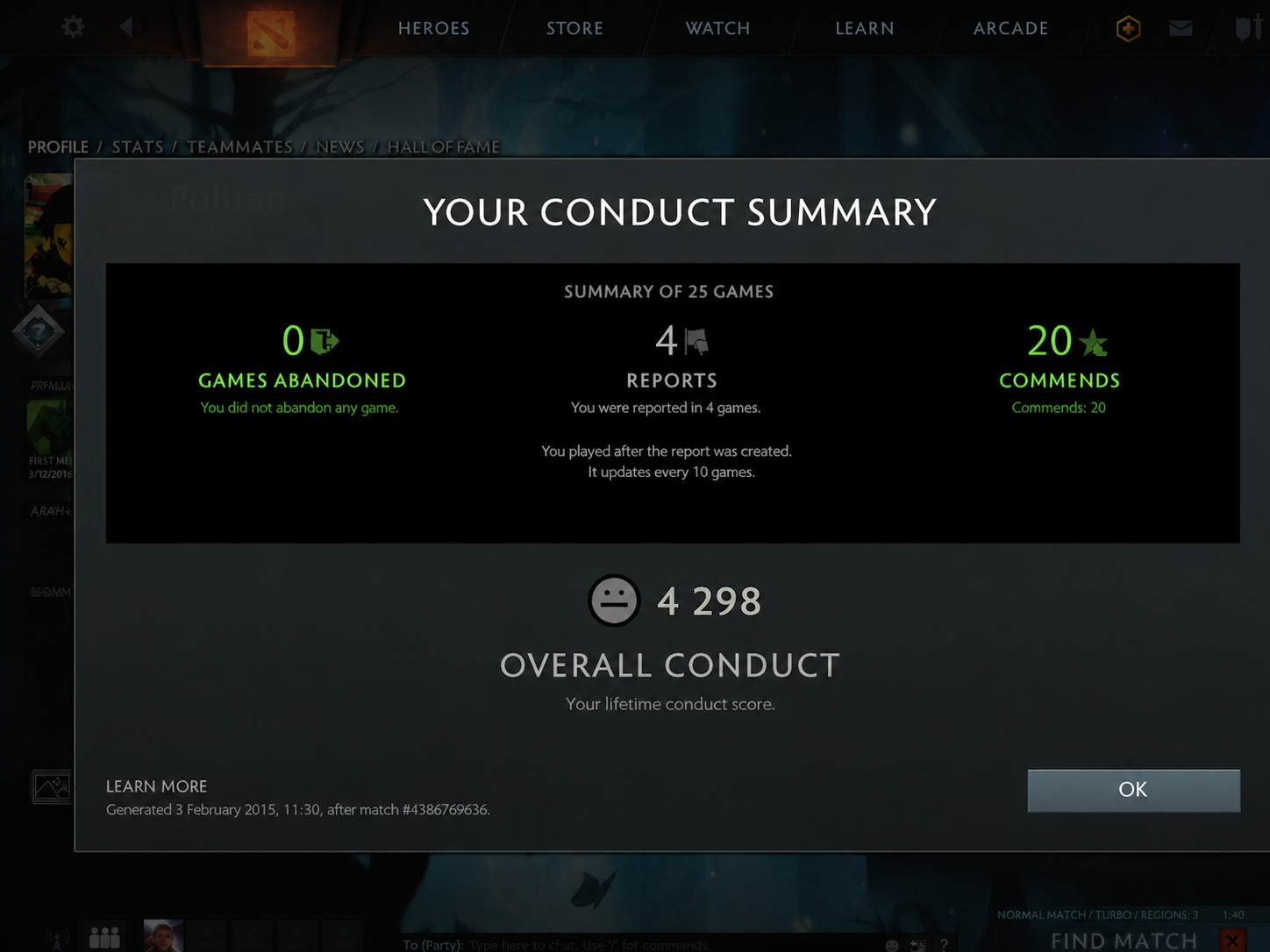
Find the Conduct Summary section. Its exact position has moved with interface updates; it usually sits in the profile next to your match stats.
The window shows your current Behavior Score along with abandons, reports and commends from your recent matches.
One detail many players miss: the score is not updated after every match, it is recalculated every 10 games. Looking for a change right after one good game is pointless, because the system registers progress only after the next block of 10 matches. This is the misunderstanding that kills motivation most often: a player makes an effort, sees nothing happen and quits trying.
Behavior Score Ranges and Restrictions
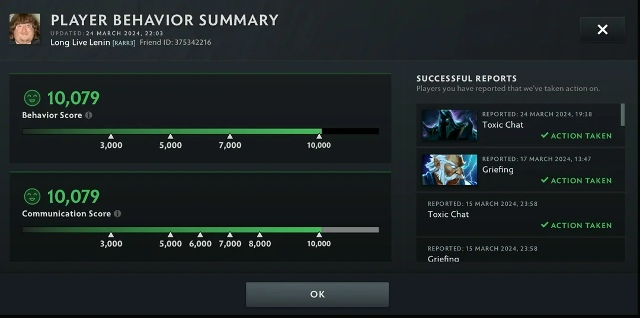
Behavior Score is more than a number in your profile. Depending on your range, you keep or lose access to in-game communication features. Valve built it that way on purpose: communication limits are one of the main penalties for poor conduct. These are the approximate thresholds reported by the player community:
| Range | What is available |
|---|---|
| Below 3,000 | All communication disabled, including pinging ally abilities and items, pausing and sending tips |
| 3,000 to 6,000 | Text chat disabled |
| 6,000 to 8,000 | Voice chat and minimap drawing disabled |
| 8,000 and above | Full access, matches with better-behaved players |
A player who cannot use voice chat in a ranked match is a problem for the whole team, not only for themselves. Coordination falls apart, teammates get frustrated, more reports follow, and the cycle repeats. That is why Behavior Score affects not just your personal experience but match results as well.
What Lowers Your Behavior Score
Before looking at how to raise the score, it helps to understand how it drops. The heaviest penalty is abandoning a match before it ends: according to player reports, a single abandon can cost around 1,000 points or more. One game you quit in frustration can erase weeks of progress. Individual reports weigh less, but they add up quickly.
Actions that reliably pull your score down:
Abandoning a match: the harshest penalty in the system.
Reports from teammates and opponents: each one is small, but a streak of them lowers the score noticeably.
Declining a match at the ready check: a small but tracked penalty.
Spamming pings and flooding chat: not an insult on paper, but it draws reports again and again.
Playing on emotion after losses: that is when most abandons and arguments happen.
The point about pings surprises many players. Someone thinks, "I didn't write anything offensive," but if a teammate felt the behavior hurt the game, the report still goes in. Any argument in chat, even a polite one, puts your score at risk.
How to Increase Your Behavior Score in Dota 2: Step by Step
Raising your Behavior Score takes a consistent approach over several weeks, not a one-off attempt to "get through one game without a fight." The steps below work together; on their own, each one has little effect.
Earn Commends
Commends mirror reports and push your score up. Other players hand them out after the match, so the goal is to give them a reason to. The basics are enough: useful wards, helping teammates and a calm tone with no flame wars. A neutral or friendly message at the start of a match lowers the chance of an early conflict. It is convenient to bind a phrase such as "Good luck, let's keep it calm" and send it with a single key.
Never Abandon a Match
It sounds obvious, but abandons are the most common reason a score collapses. Even in a hopeless game, and even when teammates are already arguing, finish the match. One abandon wipes out the gains of several good games with commends. This is the strictest rule in the system, and it has no exceptions.
Mute Instead of Replying
When a toxic player shows up, the first impulse is to argue or answer in kind. It does not work: they get the reaction they wanted, and you risk a report for taking part in the conflict. The right move is to mute their chat and voice and keep playing. If the bait still breaks your focus, you can hide chat in Dota 2 entirely.
Accept Matches on Time
A small but tracked detail: declining a found match also counts against you. The rule is simple: if you are in queue, be ready to play right now.
Watch Who You Party With
Parties are matched with the behavior of every member in mind, so playing with friends who have a very low score can put you in more toxic lobbies. That is no reason to stop playing together, but if someone is stuck at the bottom for good, take it into account.
These habits only work in combination. One polite game will not move the needle: you need a consistent pattern over 10 to 20 matches before the system registers a real shift.
Can You Raise Your Behavior Score Quickly?
There is no instant fix. The score updates every 10 matches and is cumulative by design. There is, however, a tactic that speeds things up, especially when your score has fallen very low.
Below 3,000, it makes sense to start with a few Turbo or unranked matches. The stakes are lower and arguments are usually rarer, while matchmade games still count toward the next recalculation. That makes it easier to complete the required 10 games without new reports from tense ranked lobbies. After the first update, return to ranked and keep the same pace.
A realistic forecast: after 20 to 30 matches with no abandons and no serious conflicts, match quality starts to change noticeably. You get different teammates, better coordination and calmer lobbies.
Communication Score: The Second Metric
Alongside Behavior Score, Dota 2 runs a separate system called Communication Score, which Valve introduced in 2023. Many players have never heard of it and are surprised when their chat suddenly gets restricted.
The two metrics work independently. Behavior Score shapes who you are matched with. Communication Score reflects how you communicate in text and voice: it drops when players report your communication, and a low value restricts your chat and voice. Your main Behavior Score can be perfectly fine while you still cannot talk during a match.
Keep an eye on both. The rules are the same: no insults, no spam, only useful calls. Communication Score simply depends more directly on what you write and say.
Common Mistakes That Stall Your Progress
Even players who genuinely want a higher score keep tripping over the same things. Knowing them in advance keeps you from losing progress for nothing.
One of the most underrated mistakes is tipping a teammate right after they die. The Tip feature was meant to reward good plays, but over time it turned into a way to mock people. A tip after someone's death or misplay reads as toxic and just as reliably earns a report. The second trap is watching only Behavior Score and forgetting about Communication Score.
What to cut out first:
Tipping teammates after their deaths or mistakes: it reads as mockery.
Replying to bait in chat: even a measured reply can turn into a report.
Tracking Behavior Score only and ignoring Communication Score.
Expecting instant results: the system updates every 10 matches, not sooner.
Playing on tilt: that is when most abandons and meltdowns happen.
Knowing these mistakes keeps you from sliding back and lets you move forward more steadily. Behavior Score responds to patterns, not to one good evening.
Behavior Score as an Investment in Better Matches
The system works, and it shows in practice. Players who climbed from the 3,000 to 5,000 range to 8,000 and above describe a different game: reasonable teammates, working coordination and matches without pointless arguments.
Raising your Behavior Score in Dota 2 does not mean putting up with everything. It comes down to three things: do not abandon, do not start fights and give the system time to build a track record. If you also want to improve your play, it helps to understand how Dota 2 rankings work.
FAQ
How can I increase my Behavior Score in Dota 2 fast?
There is no instant method, because the score is recalculated every 10 matches. A streak of games without abandons or conflicts is the quickest route; with a very low score, start with Turbo or unranked matches.
How many games does it take for Behavior Score to go up?
The first change appears after your next 10 matches. A noticeable improvement in match quality usually comes after 20 to 30 games without abandons or reports.
Where can I see my Behavior Score?
In your profile in the Dota 2 client, under Conduct Summary. It shows your current score plus abandons, reports and commends from recent games.
What is the maximum Behavior Score in Dota 2?
The scale goes up to 12,000. A score of 8,000 or higher is considered good and does not restrict communication in matches.
