


The easiest places to find teammates in CS2 are dedicated teammate-finder sites and Discord servers, community groups on social networks and gaming forums, the Steam forum and online tournaments, and, offline, gaming clubs in your city. Before you start, decide what you need teammates for: Premier and ranked matches, or relaxed evening games. That determines where to look and how to filter people.
Counter-Strike 2 is still a team game, and coordination and "chemistry" between five players often matter more than aim and raw skill. A tactically prepared team where everyone knows the common angles, timings, utility lineups and round economy rules has a serious edge over most opponents. So the goal is not just to find teammates, but good ones, and that starts with knowing exactly who you are looking for.
Criteria for choosing teammates
To narrow down the candidates for your "brothers in arms," look at them through a few parameters:
Game mode. Decide who you are looking for: someone who will help you climb CS Rating in Premier and Competitive ranks, or someone to enjoy a few casual matches with on the weekend.
Age. Finding a teammate is not hard these days, but if you are an adult, you may not enjoy playing with a teenager.
Position. Work out which role on the team you need to fill: a specialist, such as a strong entry fragger who is weaker elsewhere, or a more versatile player.
Personal preferences. Teammate ads often include restrictions, such as no players below a certain rank or no toxic players. You can do the same: set clear criteria and filter people out to find teammates who are pleasant to play with and help you get results.
Searching for teammates: specialized sites
These include resources whose main purpose is to publish advertisements for gamers who want to join a team or find partners. You do not even have to post your own ad: browsing the existing listings and picking the best fits is often enough.
The main advantage of these sites is filtering: you can sort listings and see only the ones that fit. Typical filters include gender, time of day, age, purpose (competitive play or just for fun) and country.
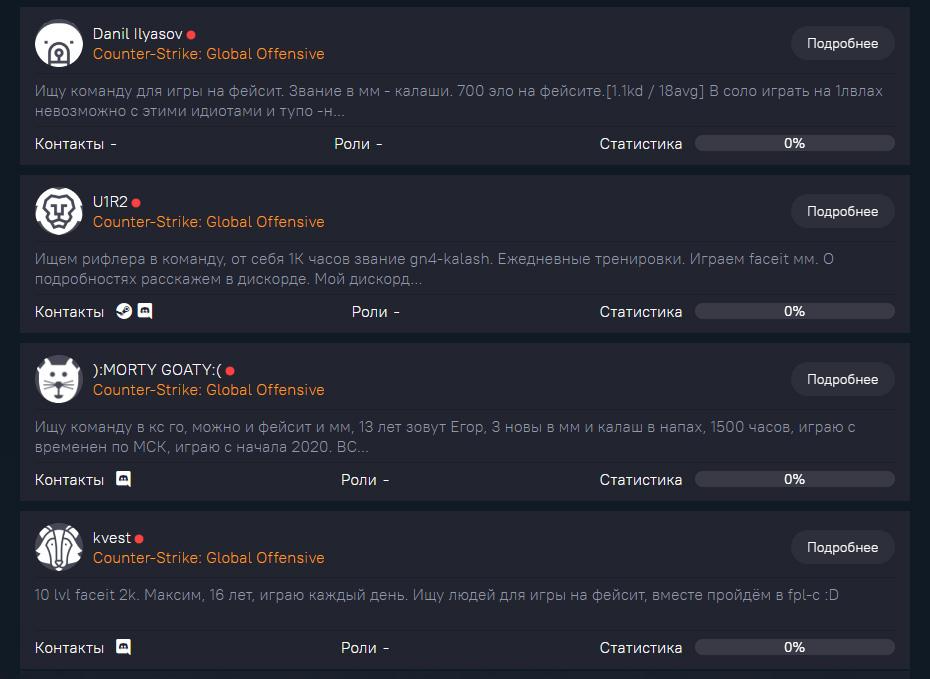
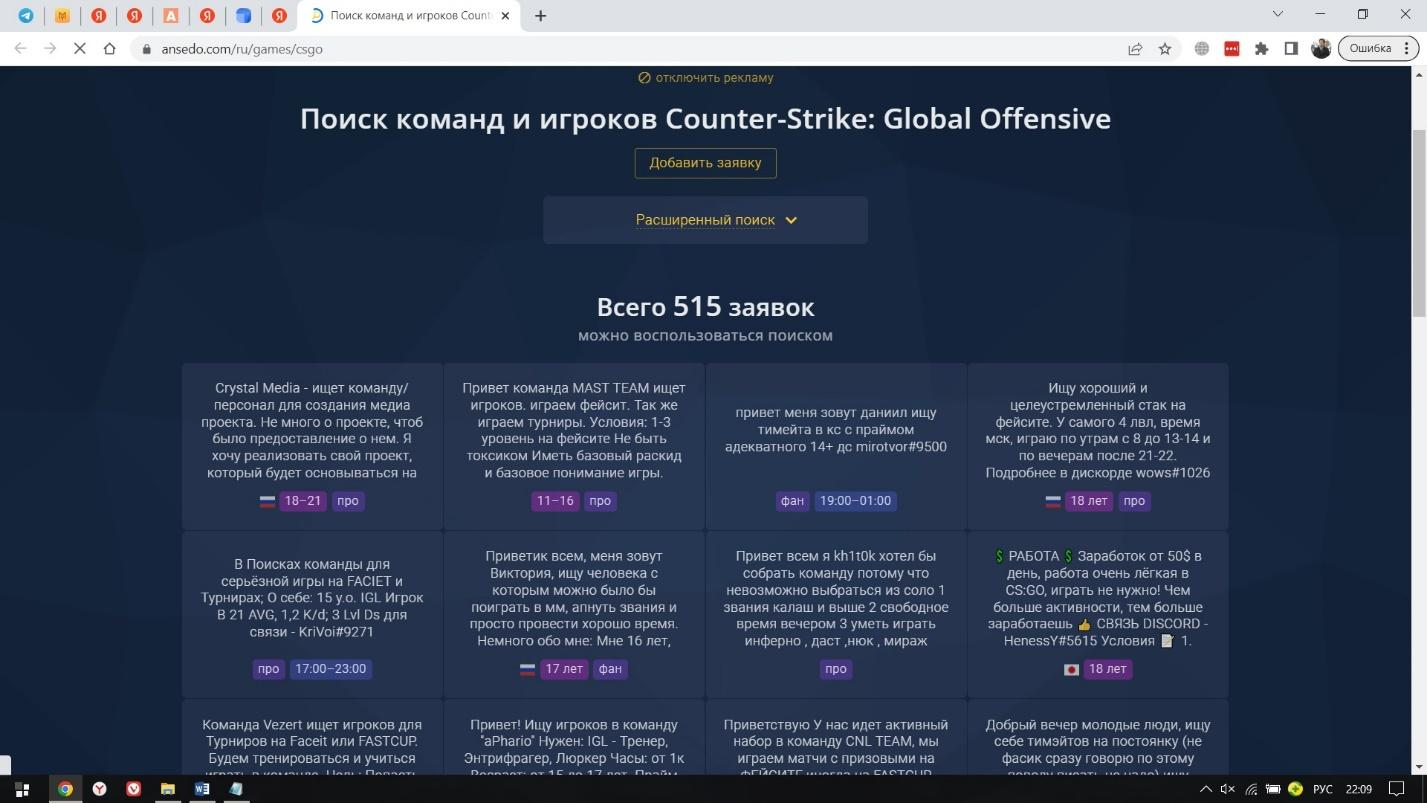
Two long-standing sites of this kind in the Russian-speaking community are Ansedo and CoopLand, where you can find both individual teammates and a whole team. Before signing up on any such site, check that it is active and never asks for your Steam login and password: a genuine teammate-finder service does not need them.
Search for teammates: thematic sites and forums
Sites where Counter-Strike players hang out are a great place to look for partners.
Forums usually have open threads where anyone can post a call and look for allies for the next match. If the first site does not work out, that is fine: there are plenty of them, and sooner or later you will find the right teammate. And if you speak other languages, do not limit yourself to communities in one language.
Instead of browsing forums, you can also take the initiative and post an ad yourself. Your conditions may appeal to like-minded players.
A less obvious option is to post that you are looking for teammates in the comments under a Counter-Strike 2 video or article. Those sections are read by the same players who are looking for a team.
Searching for teammates: social networks
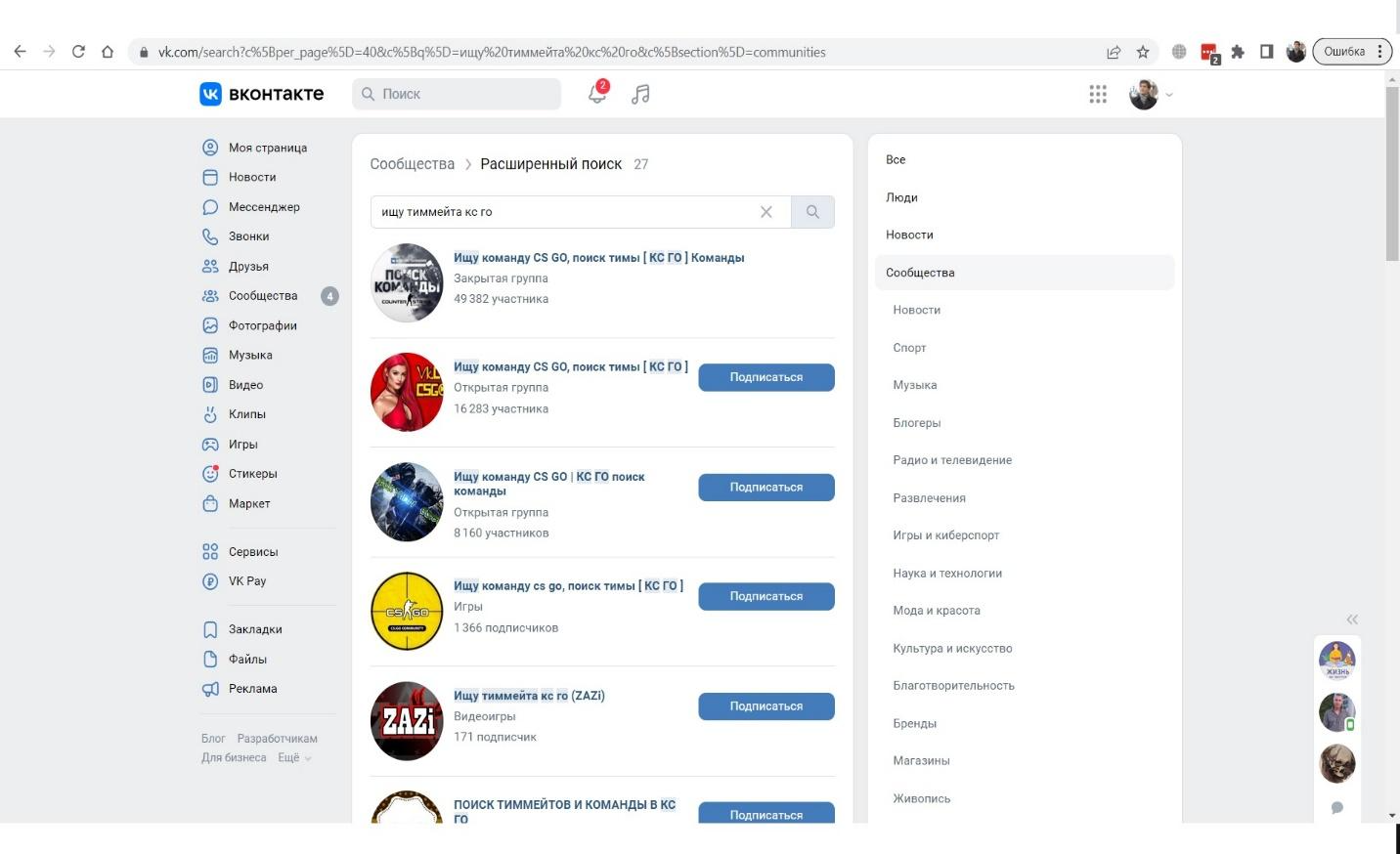
Here is how it works on VK, a social network popular in the CIS:
Go to the social network.
Type keywords such as "find a teammate" or "looking for a teammate" into the search bar. Add "CS2" to the query, otherwise you will get ads for other games.
Open the relevant communities and look through their posts for suitable offers.
Players also look for teammates in messaging apps, and Discord is by far the most popular among them. It has channels with server lists and streams and, of course, communities dedicated to finding teammates. Discord is the closest thing to dedicated sites like Ansedo, just without the filters.
On top of that, Discord lets you not only text a potential teammate but also talk on voice.
Searching for teammates: Steam forum and tournaments
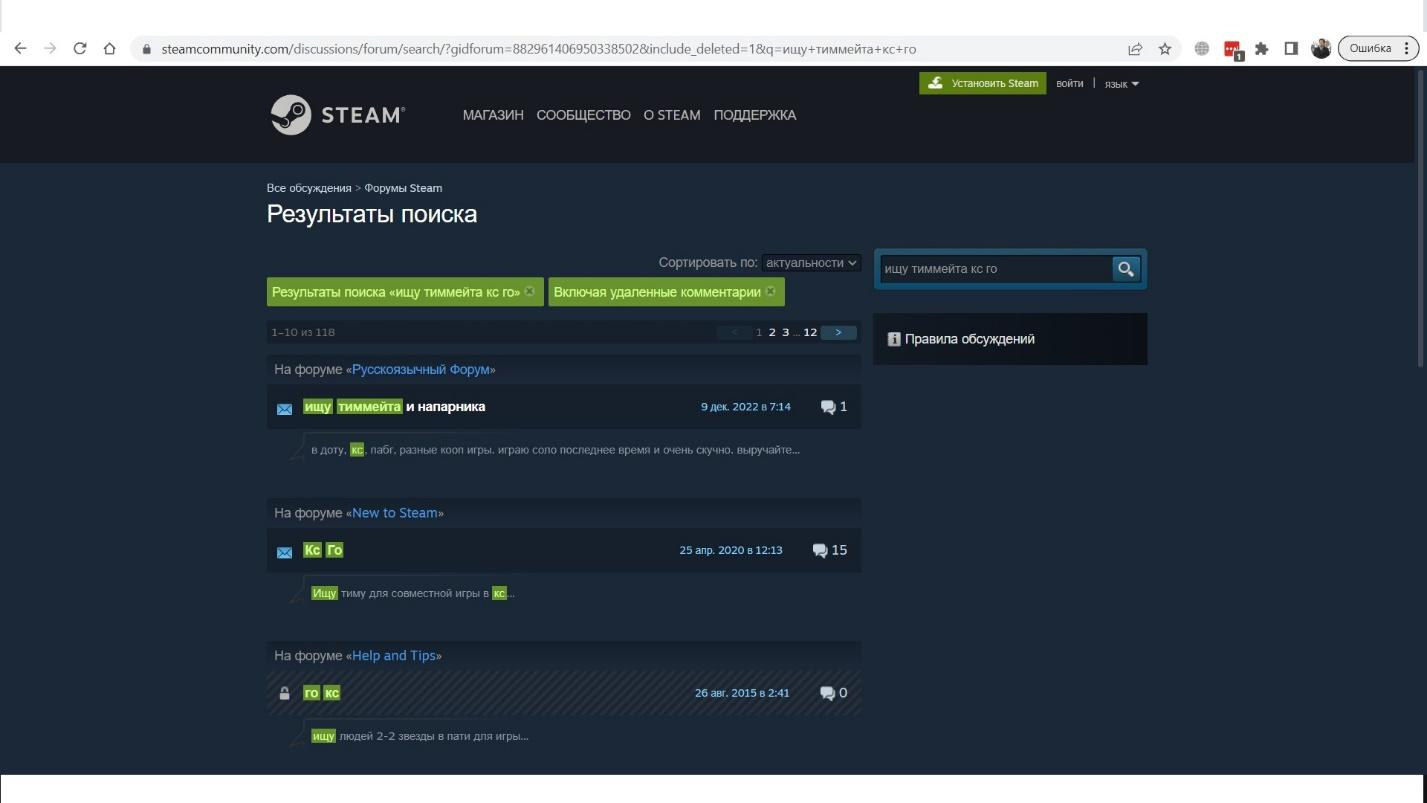
A great way to recruit a few solid players for your team is the official Steam forum. The reason is simple: a huge number of Counter-Strike 2 players pass through Steam, and among them you are likely to find one to four sensible and capable people, both serious competitors and casual players.
Tournaments and platforms like FACEIT (see our guide on how to register on FACEIT in CS2) are another good option. They usually attract fairly skilled players, so it makes sense to drop into online competitions now and then and keep an eye on the people there. Later you can get to know them and invite them to your team.
Searching for teammates: pay attention to your city
This advice only works for readers in large cities with an active local scene and esports clubs.
Before the internet became part of everyday life, gaming clubs were almost the only place where Counter-Strike players met, talked and played through sleepless nights.
This option is not completely outdated: you can still find teammates in clubs, as long as you like meeting people in person and do not mind the crowd and the dim lighting.
The upside is that offline contact builds the strongest, most tightly knit teams, whose players understand each other from a single gesture or word. Members of such teams also tend to take practice and matches more seriously, because they do not want to let their partners down.
Possible problems with teammates
Finding teammates is often not enough: a partner who seems fine at first can turn out to be extremely toxic and ruin the atmosphere in the team.
Clashing personalities are another thing that breaks a team apart. Four hot-tempered players will quickly get annoyed by one slow, calm partner and will usually try to push him out.
And then there is the ego the size of the universe: a player who always takes the spotlight, claims the team's wins as his own and dodges responsibility for losses.
Two universal remedies help prevent these problems: learn to read people so you can spot poor fits quickly, and give reasonable teammates enough time to build chemistry. A short trial period of a few evenings together usually shows more than any interview: how a player communicates after a lost round, whether he sticks to the plan and how he reacts to criticism. Once the roster is together, it is easiest to practice in a shared lobby; how to set up a party and which modes you can queue together is covered in our guide on how to play CS2 with friends.
