


A CS2 skin's price never comes down to one thing: official rarity is only a starting point, and float, pattern, StatTrak, source, and market demand all stack on top of it. Some of the mechanics that shape price today are CS2-era additions that classic CS:GO never had: the Armory Pass and Armory Credits, the Dead Hand Terminal system, and knife and glove crafting through trade-up contracts, available since fall 2025. These factors sometimes work against each other: the priciest agent on LIS-SKINS carries the lowest official rarity tier of any agent, and an ordinary trade-up contract sometimes guarantees a specific skin if a collection simply has no other item at that rarity step. Below is how each of these factors plays out in practice, and what's worth keeping in mind when you're buying or selling a skin.
Official Rarity: Only the Starting Point
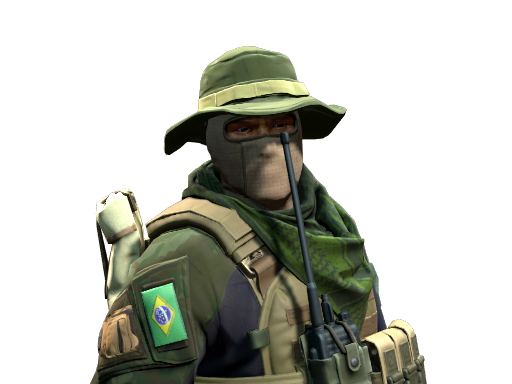
Weapon skin rarity climbs in steps: Consumer, Industrial, Mil-Spec, Restricted, Classified, Covert, plus a one-off orange Contraband tier that exists for exactly one skin in the game. Knives and gloves run on their own scale — the gold ★ Extraordinary tier. A higher tier usually means a pricier item, but that logic barely applies to agents: they use a separate four-tier scale (Distinguished, Exceptional, Superior, Master), and the priciest agent on LIS-SKINS happens to carry the lowest of those four tiers. Rarity sets an expectation, but it doesn't guarantee the final price — the finer-grained factors below do the rest.
Float and Surface Condition
Float is measured on a 0-to-1 scale, but every skin has its own allowed range within that scale, and that range determines which of the five wears it comes in: Factory New, Minimal Wear, Field-Tested, Well-Worn, or Battle-Scarred. Not every skin gets all five: AWP | Fade only comes in the top two wears, and Asiimov has neither Factory New nor Minimal Wear at all. Some skins cap the float artificially: M4A4 | Howl has no Battle-Scarred because its float never climbs above 0.40. The pricier the skin to begin with, the more float moves the final number: on cheap finishes the wear-to-wear gap is a dollar or two, while on a grail like the Howl it can run into the thousands.
Pattern and Paint Seed
Some skins carry a fixed pattern index, a number assigned to the item the moment it's generated that locks in the exact visual result: the swirl placement on a Case Hardened (including the rare "blue gem"), the fade percentage on a Fade finish, or the "Fire and Ice" layout on a Marble Fade. Pattern matters most for Case Hardened, Fade, and Marble Fade; on a Doppler, the price driver isn't a pattern index at all — it's the specific phase or a rare gem variant, a different mechanic entirely. Either way, it's a price multiplier separate from rarity and float, and sometimes the biggest one of all: a great pattern or a rare phase can push a skin's price tens of times higher than an ordinary copy of the same model and wear. For a closer look at how this plays out on one specific finish, see the breakdown of Fade pattern characteristics.
StatTrak and the Souvenir Version
StatTrak, the confirmed-kill counter, usually adds a noticeable premium, but the exact size of that premium varies a lot from skin to skin: sometimes it's a third to half again the regular price, and sometimes the counter version is rare enough that the price climbs several times over. The Souvenir version works differently: it only drops from special packages at major tournaments, is tied to a specific map and major, and never coexists with StatTrak — the two are mutually exclusive versions of the same skin, not two levels of one scale.
Source: Case, Operation, or Armory
A CS2 item can reach the market through very different routes, and that shapes how supply behaves going forward. Fresh copies of a skin keep appearing for as long as the relevant case stays in circulation and players keep opening it: even a case that's no longer part of the active drop pool still opens with a key as long as existing copies are around. Skins from closed operations (Shattered Web in 2019, Broken Fang in 2020, Riptide in 2021) work differently: once an operation ends, its direct reward source shuts down, though individual skins from it can sometimes still surface through trade-up crafting — more on that below. Armory is its own case: a player buys an Armory Pass, earns Armory Credits from matches, and spends them on skins from a specific collection with no lottery involved, while The Dead Hand Collection runs on its own separate system: Dead Hand Terminals themselves can turn up as a weekly drop, and owning one unlocks buying items from that collection. Closing off the direct source usually makes the market the main way to get an item — the question of which cases are worth buying for that particular skin stops applying, though for some collections fresh copies can still show up through trade-up crafting.
Trade-Up Contracts and Knife/Glove Crafting
A standard trade-up contract takes ten qualifying skins of one rarity. They can come from different collections, and the possible outcomes depend on which collections the inputs belong to — normally that makes the result random. But feed it all ten qualifying skins from The Havoc Collection specifically, and the result is guaranteed to be AK-47 | X-Ray, since it's the only Covert skin in that collection. AK-47 | Nouveau Rouge works the same way: ten Restricted-rarity skins from The Radiant Collection specifically guarantee it, the only Classified item in that collection. A separate mechanic, knife and glove crafting, has been available since fall 2025: exactly five Covert skins of one type, all regular or all StatTrak with no mixing, yield a random gold-tier item from the collections of the inputs. Both mechanics create an extra source of supply, and that alone can noticeably move the market price.
Stickers on the Weapon
Stickers applied to a weapon become part of that listing's total price and can shift it noticeably. Rare tournament autographs or holo variants can multiply an otherwise ordinary skin's value, and a few strong stickers together sometimes cost more than the weapon underneath them. At the same time, most buyers hunting for a specific finish to match a loadout prefer a clean copy with no stickers at all, since a sticker can't be peeled off without destroying its own resale value. A stickered listing is a narrow slice of demand, not a universal price boost.
Demand, Liquidity, and Status
Even two skins that match on rarity, float, and pattern can price differently over something as simple as liquidity — how many listings actually exist on the market. Thin supply, like the handful of Battle-Scarred listings on a top grail, trades with a much wider price spread and no guarantee of a quick sale. Demand also tracks the weapon's "weight class": the AK-47, AWP, and M4 draw more attention on average than niche models, and a skin's individual status — how recognizable it is, whether streamers and pros show it off — sometimes pushes the price well past what scarcity alone would explain. M4A4 | Howl makes the point well: supply there is genuinely constrained, but its status as a legend of CS adds far more to the price than the shortage by itself.
Comparing What Shapes a Skin's Price
| Factor | How Much It Matters | Example |
|---|---|---|
| Rarity | Sets a starting expectation, doesn't guarantee the final price | The priciest agents carry the lowest official tier |
| Float | From barely noticeable to a multiple of price on grails | Howl's wear-to-wear gap runs into the thousands |
| Pattern / index | Can be the single biggest multiplier of all | Case Hardened's blue gem |
| StatTrak | Usually a real premium, but the share varies widely | Anywhere from a third more to several times the price |
| Source (case / operation / Armory) | A closed source caps future supply | Skins from closed operations like Shattered Web, Broken Fang |
| Trade-up and crafting | Sometimes gives a guaranteed, not random, result | AK-47 X-Ray from The Havoc Collection |
| Stickers | Can noticeably raise one specific listing's price | Rare tournament autographs |
| Demand and liquidity | Determines how easily a listing sells at its asking price | Thin Battle-Scarred listings on top grails |
Frequently Asked Questions
What affects a skin's price the most?
There's no single answer — it depends on the skin. On cheap finishes, rarity and source explain almost all of the price; on expensive grails, pattern or an extreme float can outweigh everything else.
Is a rarer skin always more expensive?
No. That holds as a general rule for weapon skins, but it doesn't hold for agents at all — official rarity tier there barely tracks price, and a recognizable character matters far more.
How does StatTrak change the price?
It usually raises it noticeably, but there's no universal percentage — the premium depends on the specific skin and how rare the StatTrak version actually is.
Can you guarantee crafting a specific skin?
Usually not — a trade-up returns a random skin one rarity up, and the pool of possible outcomes depends on the collections of all ten skins fed into it. But if all ten inputs belong to the same collection and that collection has only one possible item at the next tier, the result becomes predictable — as with AK-47 | X-Ray.
